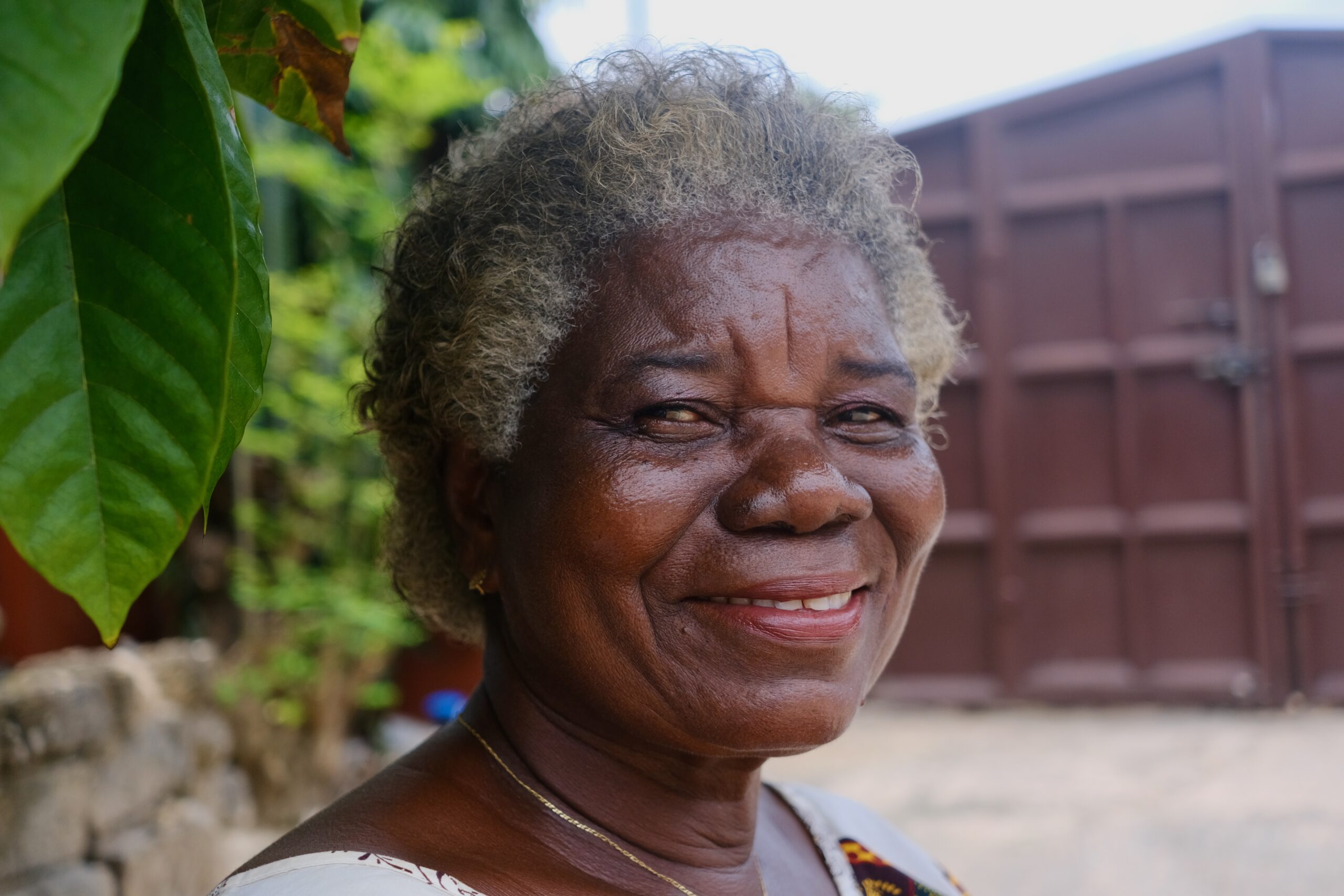
For the first post in a series under “My life in Ghana”, I wanted to share the story of my friendship with a special person called Auntie Alice. This story begins on the 2nd of November 2023, my very first day in Ghana. I had just left a meeting with the Government Statistician at the offices of the Ghana Statistical Service, where I would be working as an economist and ODI Fellow for the next two years. Near the office, outside a shop full of crates of water, beside a large fridge proudly displaying an assortment of local drinks, I was introduced to Auntie Alice. And so began a friendship that lasted my entire stay in Ghana — and which will hopefully last for many more years to come.
Alice dominates the little passageway leading to Rawlings Canteen, an informal food court, built by former President John J. Rawlings, for workers at the nearby government offices. Hot, cramped and loud with the voices of women serving up all kinds of Ghanaian dishes, this little passage — unavoidable for those seeking their next bowl of satisfying waakye — is definitely her territory. Anyone who goes past will inevitably collide with her warm, welcoming and occasionally suspicious attention, the friendliness of her greeting tempered only by the effects of the brutal temperature. It was in this passage, sitting outside her shop, that I got to know Auntie Alice.
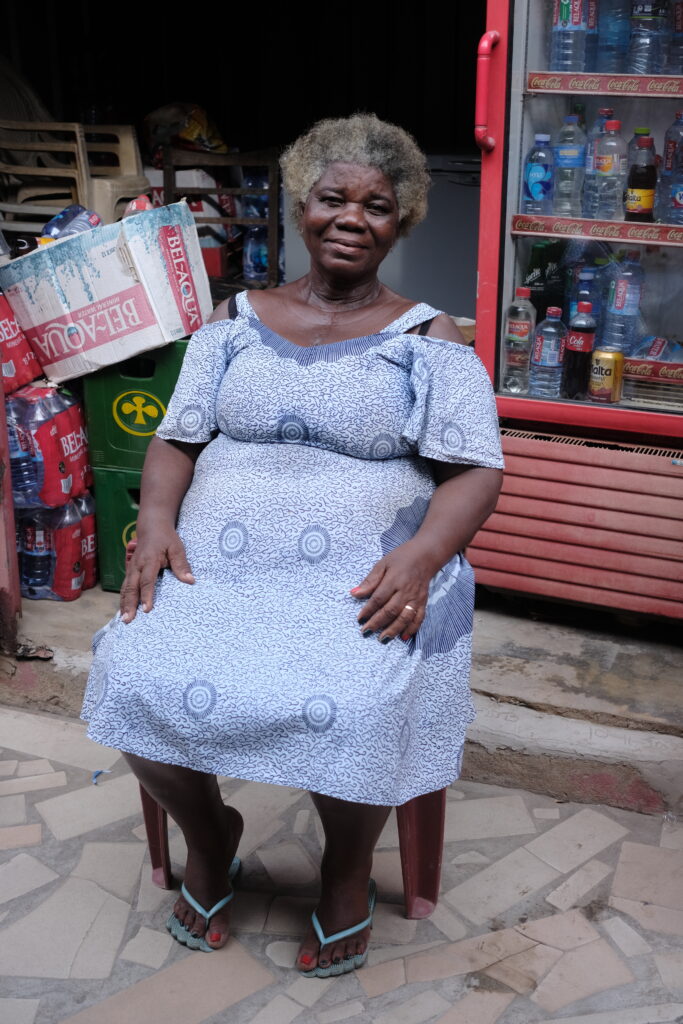
Admittedly, at first, her willingness to be friends took me aback. I was a little surprised and slightly suspicious: why was the lady so friendly and talkative? What did she want? In those first few weeks in Ghana, I received many requests for friendship from well-meaning Ghanaians. I think I gave my phone number out over a dozen times, often having to block continuous calls from people I had met for only a few minutes. However, since Alice was working outside my office, I began to see her every day, and with each meeting, trust slowly built between us.
Then Alice began calling me. I was saved in her phone as “Gwerg GSS White Man” for the first few months, which I found very amusing. Many people may have ignored those initial calls, but I was curious. Those first few months in Ghana were challenging — moving to a new country always is (I’ve done it four times) — but adjusting to life in Ghana drained me emotionally and physically, and I welcomed any help I could get. The check-in each morning was like clockwork. Every day at 8 a.m., my phone would ring. If I didn’t answer at first, Alice would always persist, sometimes leaving five missed calls before I even had a chance to look at my phone. Each call followed the same script, never deviating much from:
“Uncle” (to her I was Uncle Kwesi, the name of Sunday borns in Twi)
“Auntie”
“Good morning. How are you?”
“I’m fine how are you?”
“I’m fine, by the grace. Only by the grace. Are you coming to work?”
“Yes I’ll be there, maybe 30 minutes.”
“OK I’ll be expecting you. How’s Daddy and Bob?”
“They are both fine.”
“We thank God. 30 mins though. Don’t be late. I’m waiting.”
“OK see you soon.”
“You Paaaaa, see you.”
Not long after the call, I would get to work and sit with Alice for ten or fifteen minutes, eating mango, drinking water, and discussing the day ahead. Those morning chats became part of my daily routine. We would talk about family and friends and catch up on the activities of the evening before. “Did you play football? How many goals?” Alice would ask, swinging her foot from side to side and laughing. She would always check what I had eaten for dinner yesterday, and ask what I would be having for lunch today: “waakye today or no? Maybe gobe?… You and your waakye, AHH.”
The everyday and the predictable became so meaningful in those exchanges. It was suddenly obvious that a conversation on the health of all your family members each morning was actually the most important thing anyone could discuss. After a few months, Alice knew about everything that was happening in my life, almost up to the minute.
These daily meetings also became a space for me to talk freely about whatever was on my mind, and in her completely unapologetic way, Alice would advise me — and occasionally instruct me — on what to do. This usually meant telling me to stop worrying, because Jesus was in control: “Do you put luggage on top of your head when you go in a car? No, you don’t. You put it in the boot. Don’t carry what doesn’t need to be carried, because Jesus is in control.” Her unshakeable faith, and her ability to lean on it for guidance on almost everything, was comforting and humbling — though on the occasion her husband’s taxi broke down on the roadside as we drove back from a birthday party, her assurance that only Jesus knew when we’d be rescued did become a little frustrating.
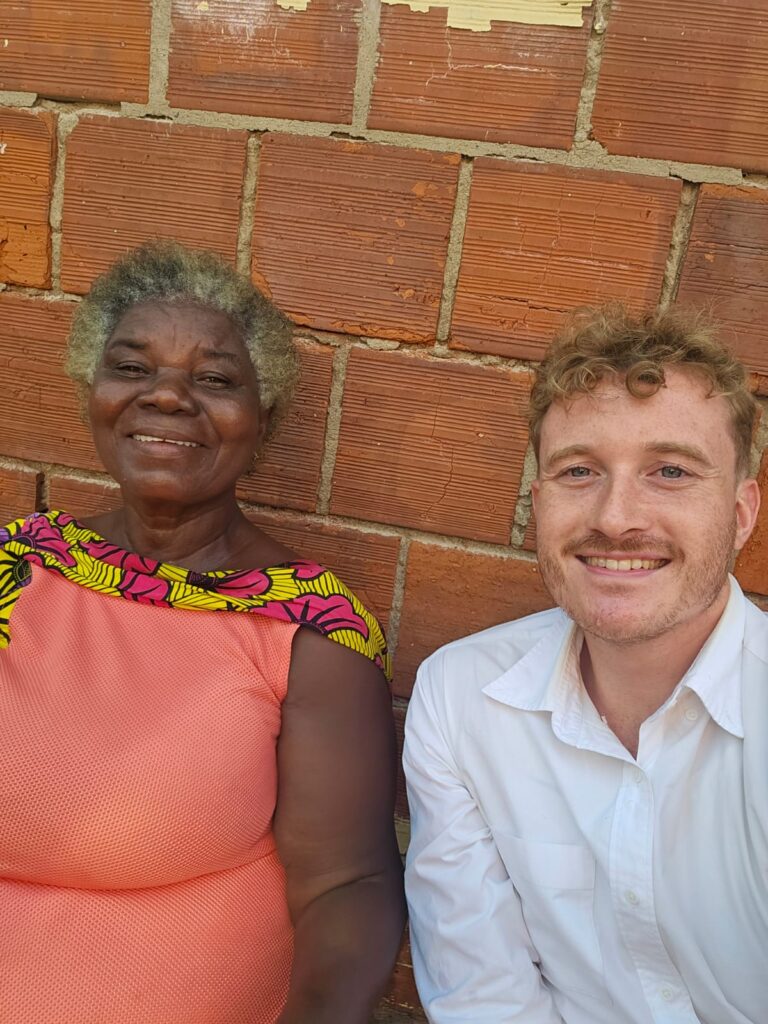
Even so, her faith was never overbearing. She had a prodigious gift for engaging you in the simplest, funniest, most emotionally intelligent way, each question flowing from the last with an empathetic logic, as if she knew exactly what I needed to hear, and what I wanted to say.
As we grew closer, I started to learn more about her life. Alice has been selling soft drinks and water outside the Ghanaian government ministries for nearly three decades — at one point she was the main supplier of Coca-Cola to all the government employees. But recently, like most of the Ghanaian economy, “the market has been down, too much competition, it’s not good at all, at all, at all.” She grew up in the Northern Volta region, moved to Accra in the late 70s, and lived through the economic and social crisis of the 80s: “It was terrible. I remember lining up for hours to get bread.” In Accra she met her husband, Lawrence, while working as a hotel receptionist; they have four daughters and five grandchildren.
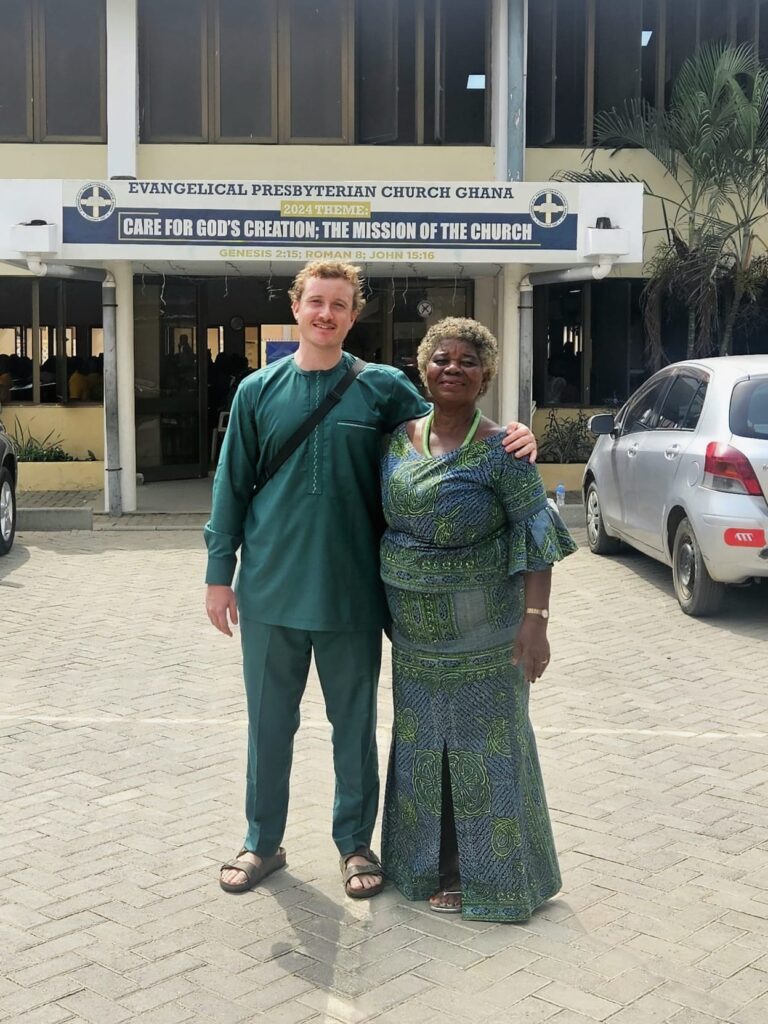
As a guest in Ghana, Alice and Lawrence took their role as my custodians extremely seriously. Over my two years there they invited me to countless events: Sunday services at church, weddings, funerals, engagements, birthday parties, public holiday celebrations. I twice visited their home village in the southern Volta, an area right on the eastern coastline, close to Togo.
These programmes — what Ghanaians call social events — were always an adventure. I often had no idea what was going to happen; the day would start with Alice and Lawrence picking me up and whisking me off to an unknown location, and end many hours later with me returning home exhausted and inebriated by endless supplies of club beer and gigantic Ghanaian buffets.
One occasion stays with me, a Founder’s Day celebration in the north of Accra, marking the founding fathers of Ghana. I got to meet countless extended family members and was introduced to their local village chief. The food was even more memorable. I was given cat stew and told: “you must not leave the bones.” Another was the annual Fafa Praiz celebration, an incredible spectacle of music and dancing at Alice’s church in Mamprobi, a church I visited with her and her family many times.
It may seem odd that one of my closest friends in Ghana was Alice. But it’s impossible to understand our relationship without seeing it through the lens of my experience of loss. Only three years before moving to Ghana, aged 25, I lost my mum suddenly to ovarian cancer. In the time since, I had packed up my life in London, ended a long-term relationship, moved to Barcelona to study a master’s, moved again to Washington D.C. for work, and ended up back in London. I didn’t know exactly what I wanted to do, but I still wanted to fulfil a long-standing ambition: to work as an economist in a developing country through the ODI Fellowship. Thankfully I was offered a position, and made the move to Accra — the third country I’d moved to in the space of two years.
This life of constant movement and new opportunity was exciting, but in chasing the next career move and the next adventure, I had probably neglected the part of me that just needed some support and, frankly, motherly love. It feels difficult to admit that as a grown man, but it’s true. And so when I arrived in front of Alice on that first day — although I don’t tend to believe in fate, having taken too many courses in statistics — I like to think I was exactly where I needed to be, and more than willing to accept her friendship.
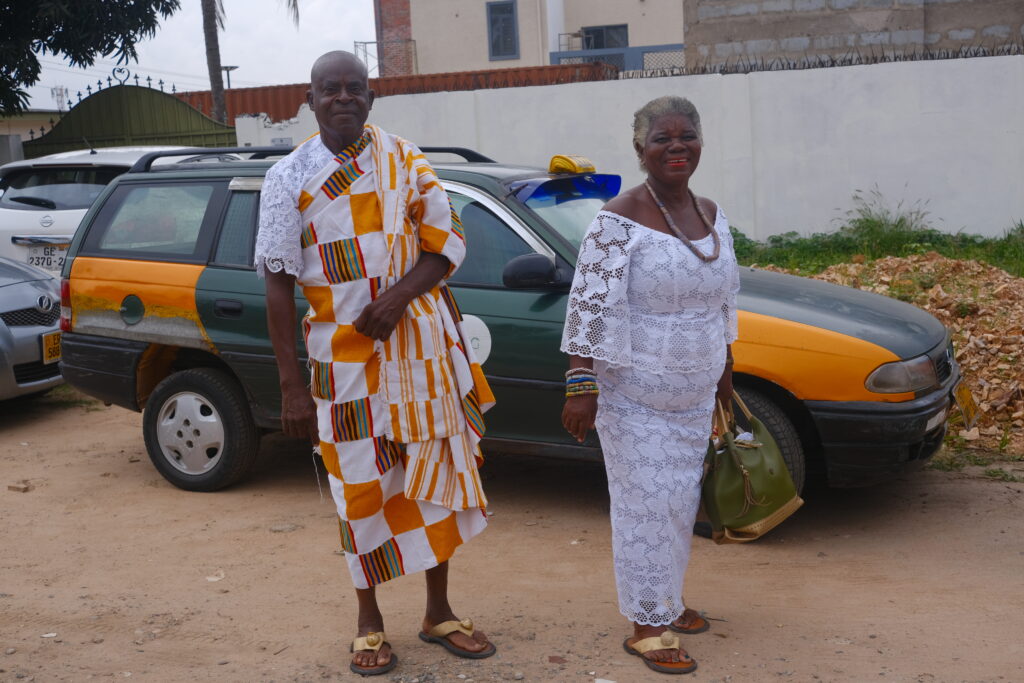
It was also fascinating to get to know someone whose identity was, by every outward metric, the opposite of my own. Gender, race, age, education, nationality, religion: we couldn’t have been more different. Yet while these differences did shape our relationship, at times in challenging ways, they mattered remarkably little against our shared love of “enjoyment” — a Ghanaian term for any time you’re having a light, funny conversation, usually with a few beers and some music.
Alice looked after me like I was her family. When I had malaria — twice — I had to tell her to stop calling to check on me. She berated me for a full 30 minutes when I bought a motorbike (I had to sit and listen to her tear me apart without being able to get a word in), shamed me when my shirt wasn’t ironed, told me how to greet people at church, celebrated all my wins, consoled me through the losses, and laughed at me every time I tried to eat fufu. I can’t really imagine how I’d have lived in Ghana without her. By the time I left, Alice and Lawrence had, to all intents and purposes, adopted me as their son. “You’re my last born,” she would say.
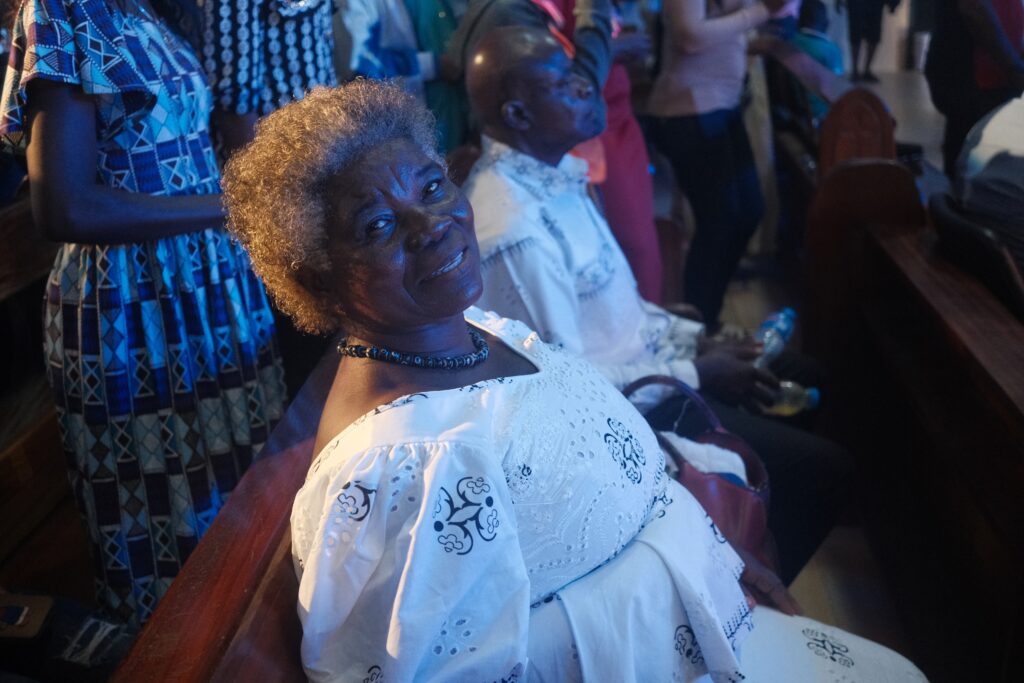
“It’s not easy, it’s not easy at all,” people often remark in Ghana, of the simple business of trying to get on with your life. It’s true for the vast majority of people, Alice included, whose life is anything but straightforward. Waking well before sunrise, working in the intense heat, selling what few things you can to make something to live on, then spending hours in dense traffic to get home and do it all over again.
Even with the immense privileges I enjoyed as a foreigner, getting through the day was a constant effort — and I learned a lot from Alice. Her humour, grace, and perseverance in the face of all of it were extraordinary, and something I saw in so many Ghanaians. But perhaps the biggest thing I learned was that being happy doesn’t have to mean complicating your life. Alice brings joy to people constantly, just through humour, a smile, asking what they are having for lunch and how their family are doing.
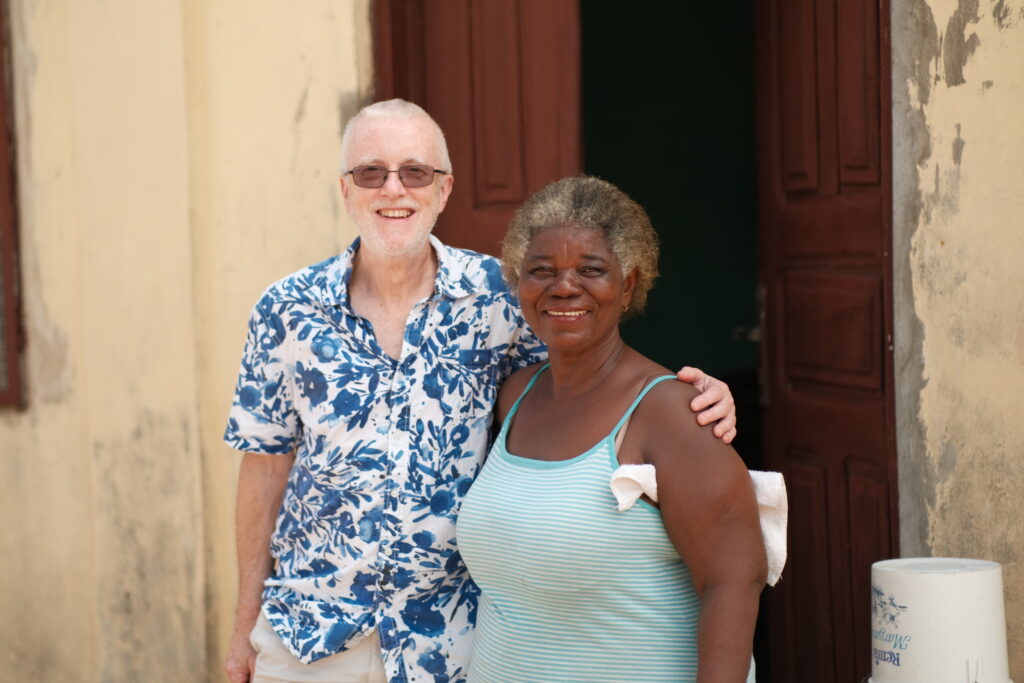
I’ll never forget — and still find hard to believe — the sheer hospitality I received from Alice and her friends and family. And, without wanting to sound too grandiose, it was a profound experience to learn how people from such different walks of life can help each other through whatever they need to get through, and have a bloody great time doing it along the way.
Leave a Reply