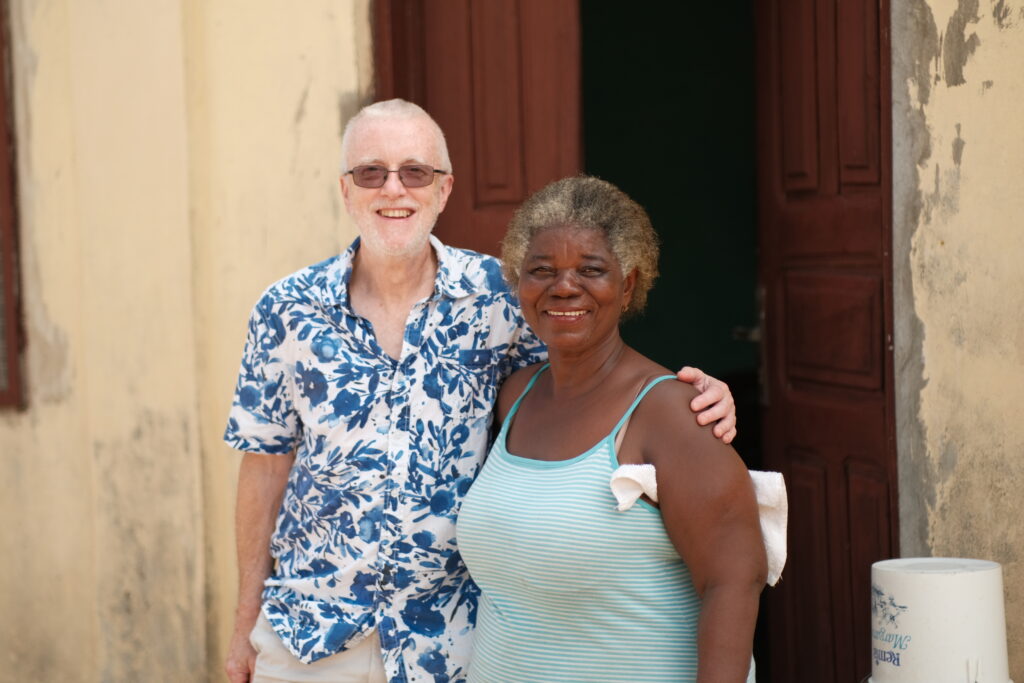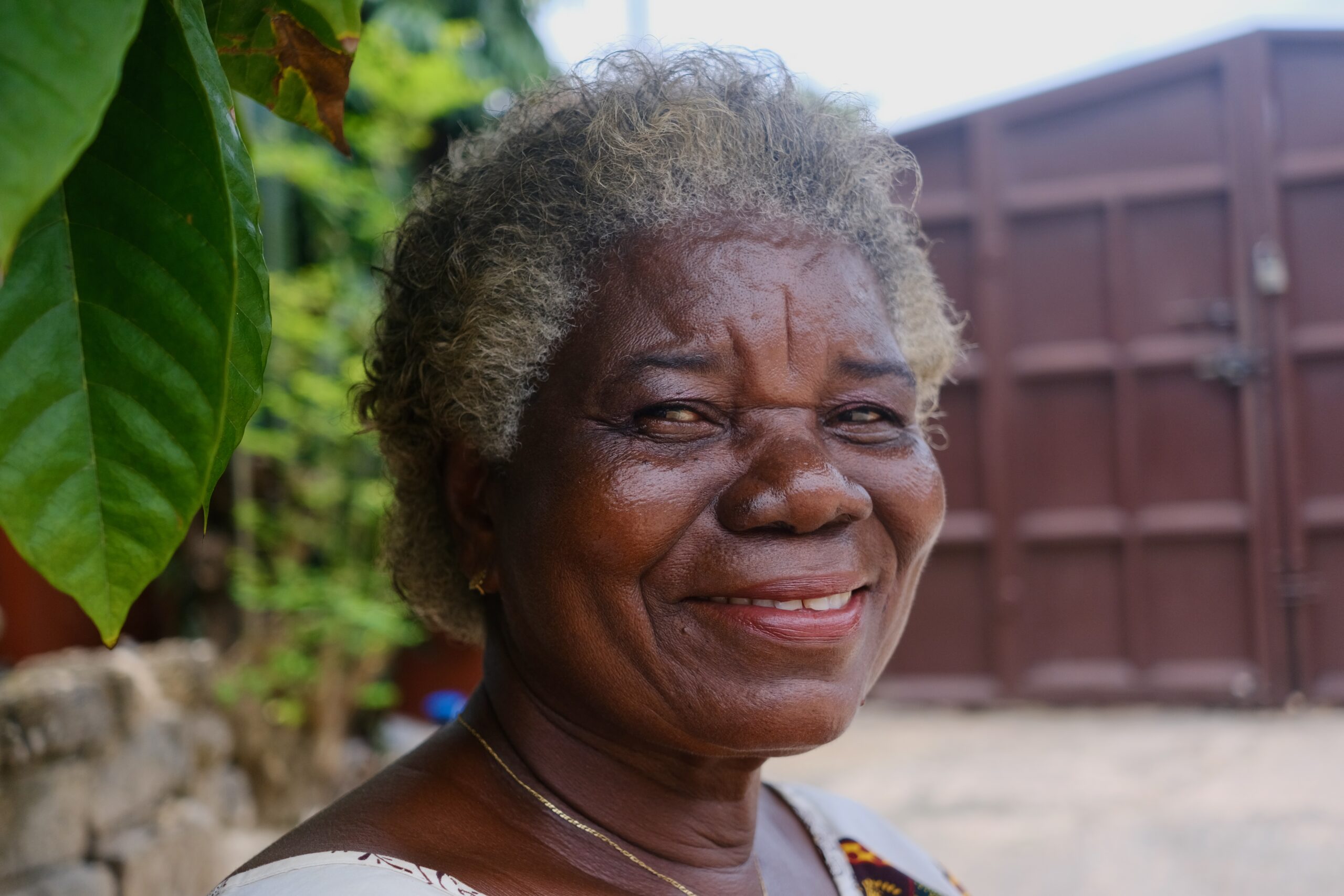
In this first post of a series about my life in Ghana, I want to share the story of my friendship with Auntie Alice. It begins on my first day in the country, the 2nd of November 2023. I had just left a meeting with the Government Statistician at the offices of the Ghana Statistical Service, where I would spend the next two years as an ODI Fellow. A few minutes from the office, outside a small shop displaying an assortment of local drinks, sat Auntie Alice. I was introduced to her that morning, and so began a friendship that lasted my two years in Ghana and will, I hope, last many more.
Alice dominates the narrow passageway leading to Rawlings Canteen, an informal food court built by former President J.J. Rawlings for workers at the nearby government offices. Hot, cramped and loud with the voices of women serving up all kinds of Ghanaian dishes, this passage — unavoidable for anyone seeking their next bowl of waakye — is unmistakably her territory. Anyone who walks past will collide with her warm, welcoming and occasionally suspicious attention, the friendliness of her greeting tempered only by the brutal heat, or by whether she likes you. It was in this blisteringly hot corner of Accra, on small plastic chairs outside her shop, that we formed our friendship.
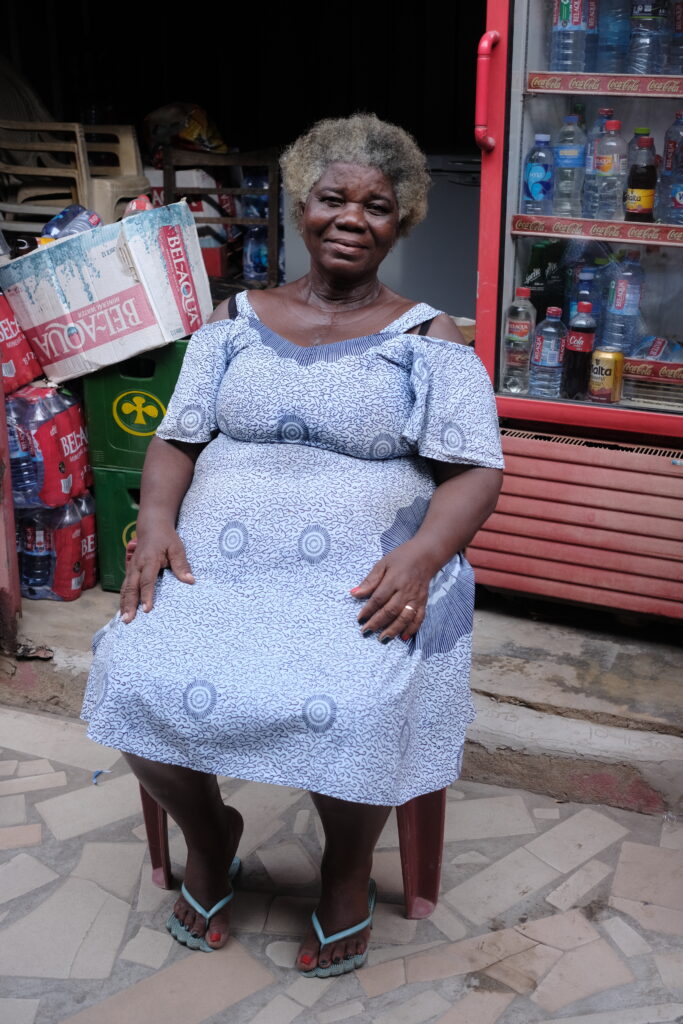
At first, admittedly, her eagerness to be friends took me aback. I was a little surprised and slightly suspicious: why was this woman so friendly and talkative? What did she want? In those first few weeks, I received many offers of friendship from well-meaning Ghanaians. I think I gave out my phone number over a dozen times, often having to block repeated calls from people I had met for only a few minutes. Yet as I met Alice each day to buy water, trust slowly grew between us, and it wasn’t long before she insisted on having my number too. I was saved in her contacts as “Gwerg GSS White Man”.
Then the daily calls started. Some people might have ignored them, but I was curious. Those first few months were challenging, and I welcomed any help I could get. So, like clockwork, at 8am every morning my phone would ring. If I didn’t answer, Alice would persist, sometimes flashing me five times before I had even woken up (flashing is a term in Ghana used for when you call someone and hang up immediately so you don’t use your own credit). This happened every day for the entire two years I was in Ghana. To her I was Uncle Kwesi, Kwesi because it’s the name given to boys born on a Sunday, and Uncle because I told her I quite liked the sound of it. Every conversation followed the same rough script:
“Uncle.”
“Auntie.”
“Good morning. How are you?”
“I’m fine, how are you?”
“I’m fine, by the grace. Only by the grace. Are you coming to work?”
“Yes, I’ll be there, maybe 30 minutes.”
“OK, I’ll be expecting you. How’s Daddy and Bob?” (She called my brother Rob “Bob”.)
“They’re both fine.”
“We thank God. 30 mins though. Don’t be late. I’m waiting.”
“OK, see you soon.”
“You Paaaaa, see you.”
Not long after speaking, I would ride my scooter to work, park up nearby and go to see Alice. Each day, as I turned the corner into that cramped passageway, my work shirt already sticking uncomfortably to my back and the familiar smell of sewage rising from the street below, there she was, sitting patiently with a beaming smile. As I approached, she’d wave her hand repeatedly in front of her, as though the anticipation and joy of greeting each other had to be physically pushed aside. Our greeting always began with a loud, slapping Ghanaian handshake (in Ghana you shake hands by snapping your middle finger against the other person’s middle finger as you pull away) and plenty of laughter. “Uncle!” she said. “Auntie!” I replied.
After asking me to sit, Alice went to her big fridge, packed with bottles, to find the brand of water I liked. I paid her a weekly water allowance every Friday so I didn’t have to find the right change each day. She called it her “We thank God it’s Friday money”, and often cheekily asked me to double it to put towards beers for the weekend, “your Auntie likes money too much” she said. A few moments after handing me the water, she would bellow “Adjoa! Adjoa! Adjoa!”, summoning a woman nearby. Adjoa would appear holding a plastic takeaway container filled with the juiciest, most delicious mango you could imagine. “Obroni, 20 cedis,” she demanded. Alice would scowl at her, insulted that Adjoa insisted on calling me Obroni, the colloquial term for a white person in Ghana, instead of my real name, Uncle Kwesi.
Mornings like these became my routine. The same sequence of events, conversations, and rituals. We always talked about how hot it was, how tired we were, and what I was going to have for lunch: “Waakye today or no? Maybe gobe?… You and your waakye, AHH.” Then came news of family and friends, and what I had been up to the evening before. “Did you play football? How many goals?” Alice would ask, swinging her foot from side to side and laughing.
I came to realise that a conversation about the health of everyone close to you, with plenty of thanks to God for everybody’s life, is a wonderful way to start the day. Alice was also very curious about my social life: who I was talking to, who I was seeing and what romantic interests, if any, I had. She has a prodigious talent for talking to you in the most simple, funny and emotionally intelligent way. Each question flowing from the last with an empathetic logic, as if she knew exactly what I needed to hear and what I wanted to say. After a while, there was nothing she didn’t know and nothing I wouldn’t tell her.
Often it didn’t matter what was said, but how it was said. Our conversations were like a dance of noises and smiles, punctuated by a hefty beat of ridiculousness. There was the “Ahhhhh Haaaaaa”, let out loudly whenever a point landed and we both understood it. And there were the “Eii” and “aa” thrown back and forth, with a shriek and a downward twist of the body to show surprise, shock or frustration. Quite often Alice shouted “aa” out of nowhere, for no reason at all. I shouted “aa” back, and we broke into a fit of laughter.
These daily meetings became a space to discuss anything I wanted, and in her completely unapologetic way, Alice would advise me — and occasionally instruct me — on what to do. Usually this meant telling me to stop worrying, because Jesus was in control: “Do you put luggage on top of your head when you go in a car? No, you don’t. You put it in the boot. Don’t carry what doesn’t need to be carried, because Jesus is in control.” Her unshakeable faith, and her ability to lean on it for guidance on almost everything, was comforting. Although when her husband’s taxi broke down by the roadside on the way back from a birthday party, her assurance that only Jesus knew when we’d be rescued did become a little frustrating.
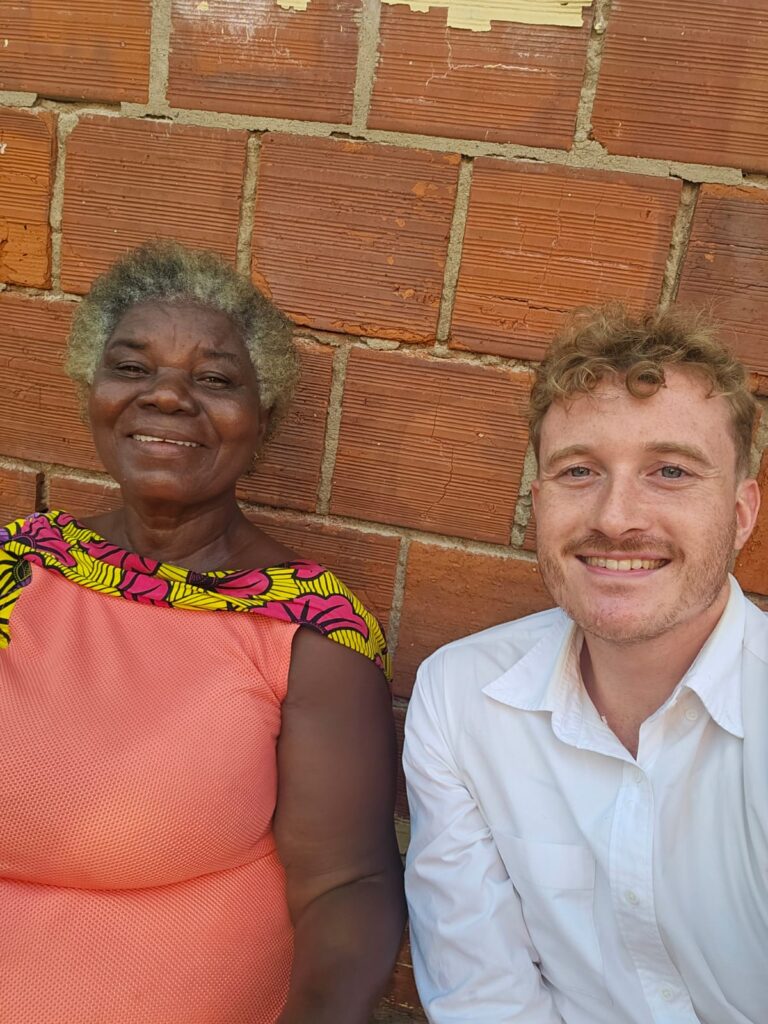
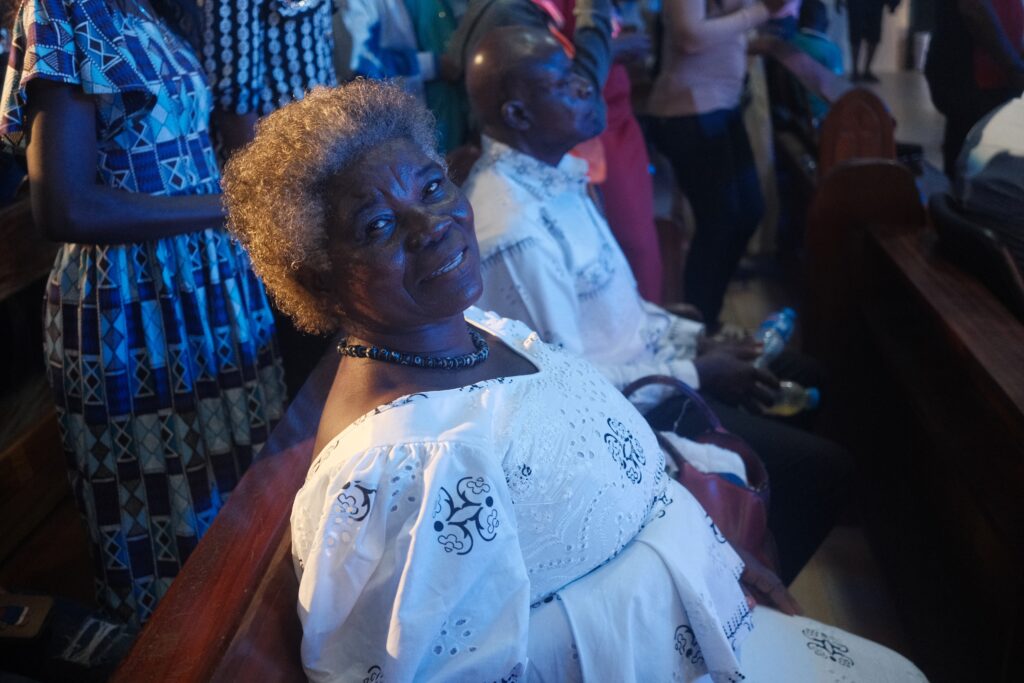
As we grew closer, I learned more about her life. Alice was born in the northern Volta Region in 1958, a year after Ghana won its independence from British colonial rule. She moved to Accra in the late 1970s, and while working her first job there as a hotel receptionist, she met her husband, Lawrence. She has lived through extraordinarily tough times, including the crisis of the 1980s, when Ghana endured severe political upheaval, famine and economic hardship. “It was terrible. I remember queuing for hours to get bread”, I remember her telling me.
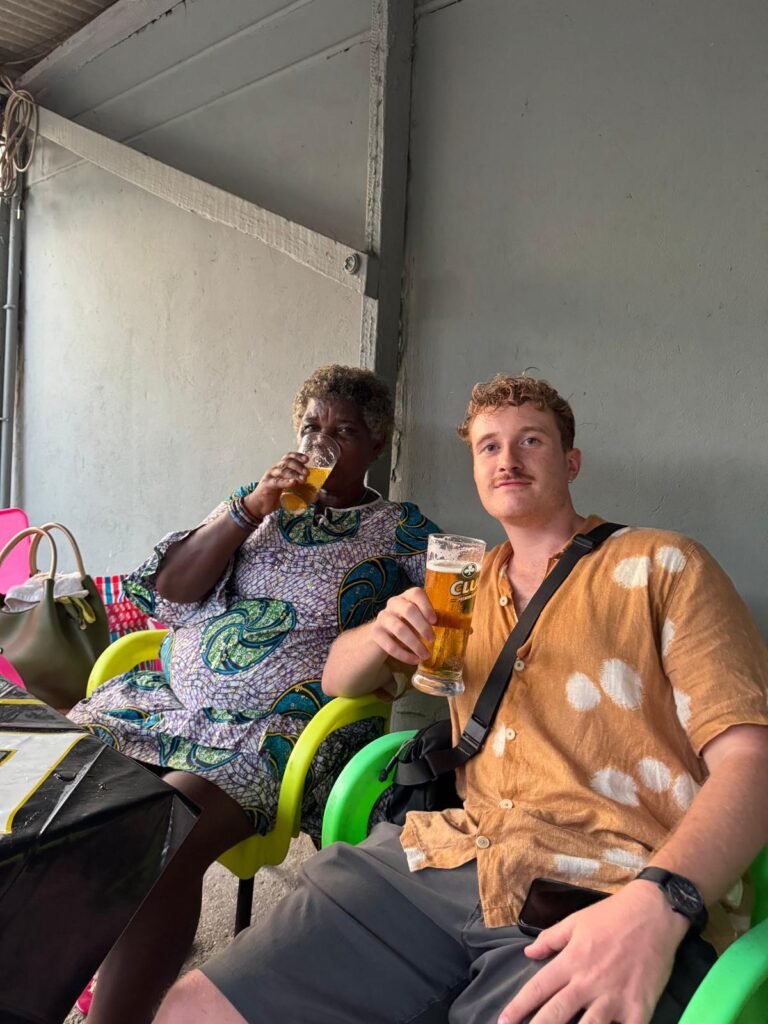
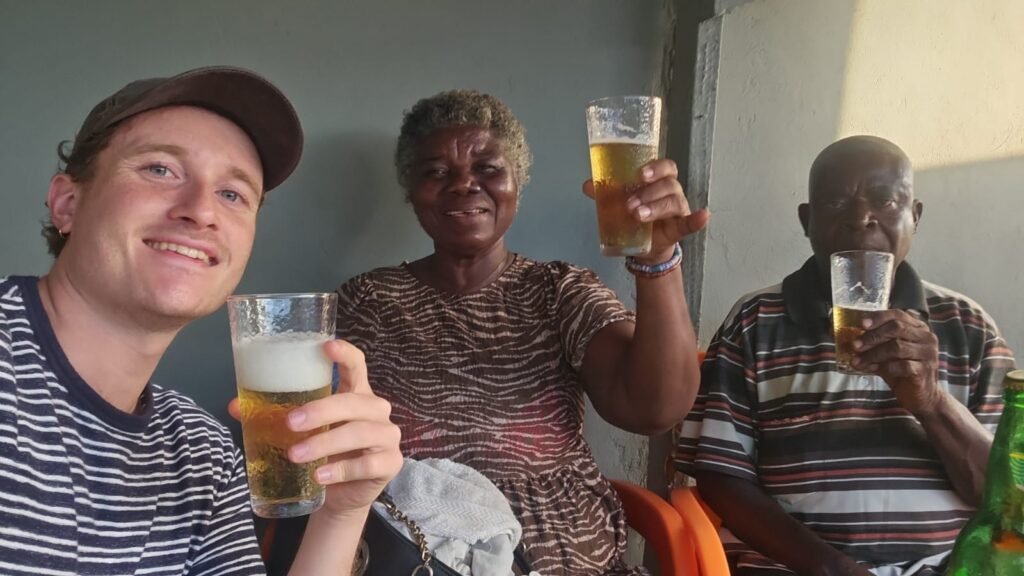
For nearly three decades, Alice has been selling drinks outside the government ministries, at one point she was the main supplier of Coca-Cola to every government department. But recently, like much of the Ghanaian economy, “the market has been down, it’s not good at all, at all, at all.” Her greatest joy in life is her family — she and Lawrence have four daughters and five grandchildren together — closely followed, I think she wouldn’t mind me saying, by a cold Club beer.
I was a guest in their country, and Alice and Lawrence took their role as my custodians extremely seriously. Over my two years in Ghana they invited me to countless events: Sunday services, weddings, funerals, engagements, birthday parties and public holiday celebrations. I also twice visited their home village in the southern Volta, a region in the east of Ghana next to the border with Togo.
The programmes, as Ghanaians call these social events, were always an adventure, and I rarely knew what was going to happen. The day would start with Alice and Lawrence picking me up in their taxi and whisking me off to wherever we were going. I would usually return home inebriated from the endless supply of beer and stuffed with food from the gigantic buffets that were customary at every programme.
One occasion that stays with me was a Founders Day celebration in the north of Accra, honouring Ghana’s founding fathers. I met what felt like the entire extended family and was introduced to the local village chief. The food was even more memorable. I was served cat stew and told, “you must not leave the bones.” Thankfully, I was spared the brain of the cat – something which was reserved for the chief’s table. Another highlight was the annual Fafa Praiz celebration, a spectacular festival of music and dancing at Alice’s church in Mamprobi, where I joined her and her family many times – including on a very surreal Christmas Day.
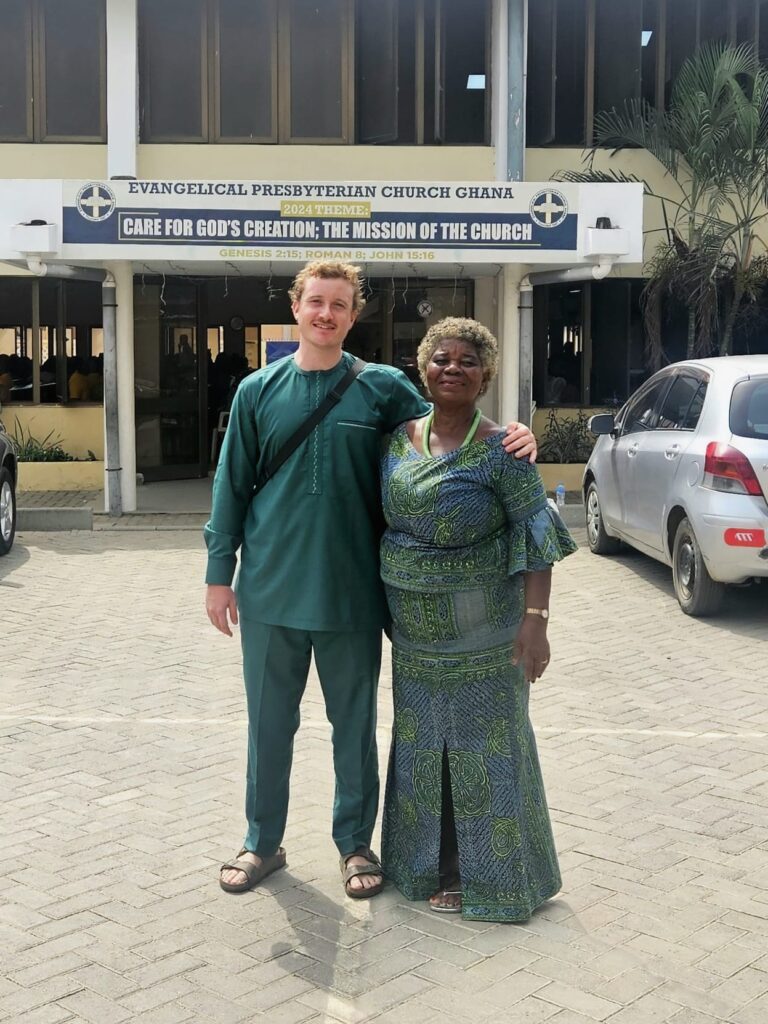
It may seem odd that one of my closest friends in Ghana was Alice. On the surface we couldn’t have been more different: gender, race, age, education, nationality, religion. Yet while these differences did shape our relationship, at times in challenging ways, they mattered remarkably little against our shared love of “enjoyment”, a Ghanaian term for any time you’re having a light, funny conversation, usually with a few beers and some music.
But to really understand our relationship, you need to see it in the context of my experience with loss. Only three years before I moved to Ghana, during the pandemic, my mum died from ovarian cancer. In the years since, I had packed up my life in London, moved to Barcelona to study for a master’s, took a job in Washington D.C., and then ended up back in London. I wasn’t done moving and still held an ambition to work as an economist in a developing country through the ODI Fellowship. Thankfully, I was offered a position and made the move to Accra, the third country I’d moved to in two years.
This life of constant movement and new opportunity was exciting, but in chasing the next career move and the next adventure, I had probably neglected the part of me that just needed to stay still and grieve. So when I arrived in front of Alice on that first day — and although I don’t tend to believe in fate, having taken too many statistics courses — I like to think I was exactly where I needed to be.
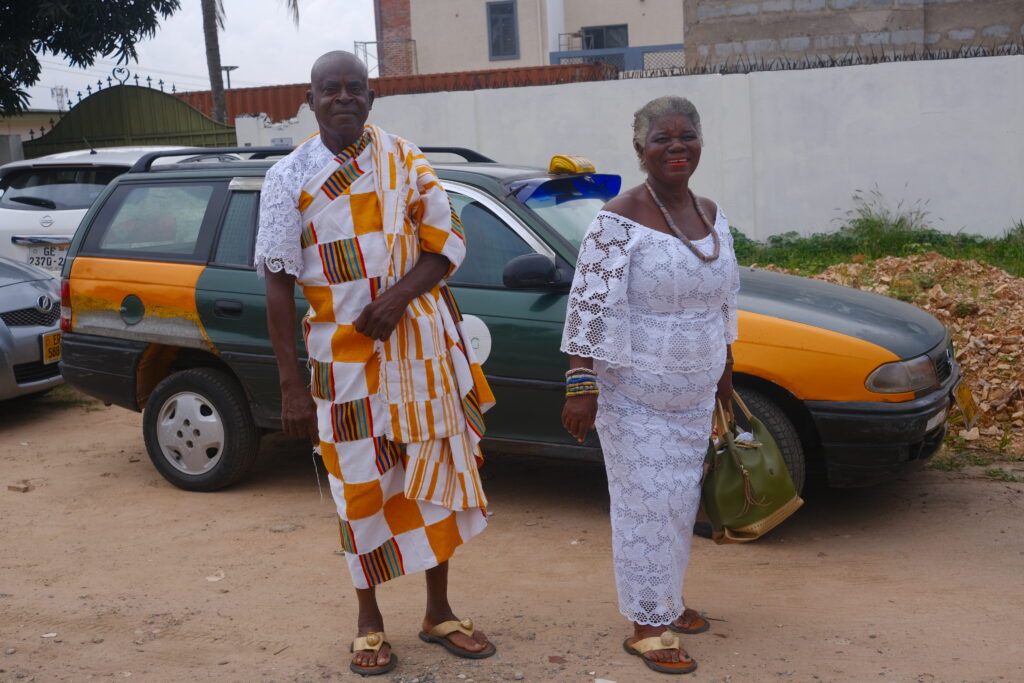
Alice looked after me as if I were her family. When I had malaria I had to ask her to stop calling to check on me. She berated me when I bought a motorbike, shamed me when my shirt wasn’t ironed, told me how to greet people at church, celebrated all my wins, consoled me through my losses, and laughed at me every time I tried to eat fufu.
When you lose your mum, a huge part of your life disappears and it leaves a gap that can never be filled, but somehow Alice, for a short time, did. I can’t imagine how I would have lived in Ghana without her. By the time I left, Alice and Lawrence had, to all intents and purposes, adopted me as their son. “You’re my last born,” she would say. And that’s exactly how I felt.
As I write this in a cold, grey London. I’m dreaming of one day returning to Ghana to see her, of finding a comfortable spot in the shade, clinking some ice-cold Clubs together, and catching that mischievous glint in each other’s eyes, before we proclaim: “Enjoyment! We thank God for everything! Aa!”