Category: Economics

  • Historical legacies and contemporary crisis in the Sahel

    Historical legacies and contemporary crisis in the Sahel

    “You see the problem those British and French made, and then left for us to solve?” Salifu would ask my brothers and me. “What happens when your house is divided?” 
    – Excerpt from My First Coup D’Etat, an auto-biographical account of post-independence Ghana by John Mahama, former President of Ghana.

    What happens when your house is divided? Such a conundrum faced members of the Ewe tribe, whose homeland straddles the contemporary national borders of Ghana and Togo. Journeying to work in the morning, families belonging to the Ewe walk out of their front door into Ghana, but, when they return home in the evening, relax in their backyards in Togo. A confusing reality, which leads many people to question exactly who they are, and where they belong. Across Africa it’s estimated that a third of historical homelands belong to two or more present day countries; with 30-40% of Africans belonging to these partitioned groups. Africa also has the largest share of landlocked countries, fencing in millions of people from the benefits of international trade, and exposing them to the vicissitudes and bad policies of neighbouring countries. 


    Landlockedness and ethnolinguitistic fractionalisation are a consequence of artificial border design following the Scramble for Africa (1885-1914), a period of European discovery and partitioning of African societies and land. The historical legacy of the Scramble can be seen today: strong statistical evidence shows that contemporary conflict, weak governance, and low development can be attributed to the arbitrary boundaries drawn by the European powers (for an excellent review of the latest evidence see this paper).


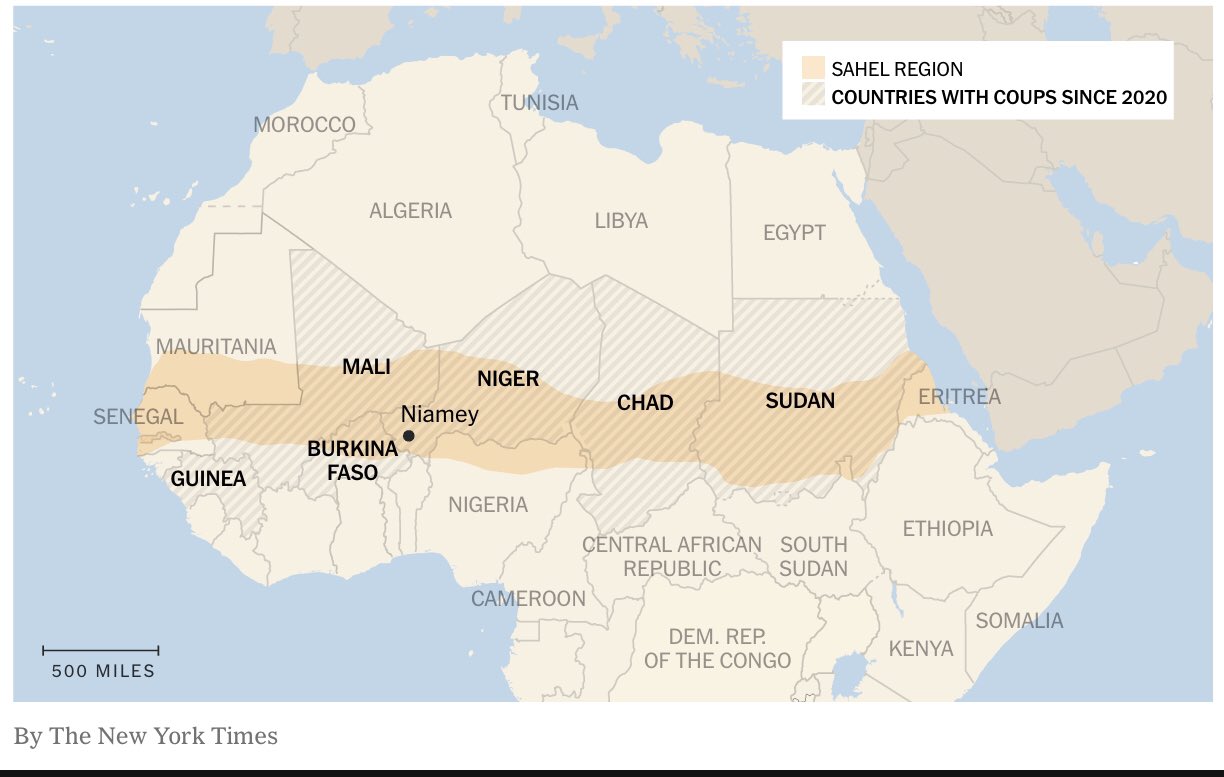
    A vast area of Africa, plagued by the historical consequences of European division and colonial administration, is the Sahel. The Sahel is a semi-arid stretch of land, enclosed to the north by the Sahara Desert, and to the south by the savannahs. The name ‘Sahel’ is an Arabic word for coast, referring to the boundaries of the region between the Atlantic coast of West Africa and the Red Sea in the east. Several states belong to the Sahel, including Burkina Faso, Chad, Mali, Nigeria, and Sudan.


    Sahelian states are amongst the poorest and least developed countries in the world. For example, the UN estimates 10 million children are in need of humanitarian assistance in the Sahel.  Figure 1 compares the Sahel to other countries in the world, categorised by their Human Development Index (HDI). HDI is a measure which takes into account health, education, and income to assess the overall development of a country. Despite noticeable improvements in the past 30 years, life expectancy in the Sahel remains 20 years less than very high HDI countries and 4 years less than low HDI countries. Maternal mortality (i.e number of maternal deaths per 100k live births) is very high in the Sahel – approximately 3.5 times that of medium HDI countries, and 50 times that of very high HDI countries. Educational attainment is also extremely weak, the average years spent in school being only three. This issue is particular acute for young women – in some regions of the Sahel up to 80% of young women were married as children, and 95% of child brides don’t receive any education.
    The Sahel ranks very poorly on life expectancy, health, and education indicators – even when compared to other countries classified as low HDI by the UNDP. Source: Analysis of HDI data. Sahel defined as Chad, Burkina Faso, Mali, Niger, and Nigeria – which constitutes the core Sahel states.
    The Sahel’s poor development reflects the regions persistent struggles against several overlapping crises. For example, the climate crisis is aggravating the already naturally extreme climate conditions in the Sahel: drought and desertification being two of the most common threats. Security is also a major concern in the area. For instance, the Global Terrorism Index 2023 finds that the Sahel region is now the centre of global terrorist activity, accounting for more deaths due to terrorism in 2022 than South Asia, the Middle East, and North Africa combined. A 2,000% increase since 2011. As the military juntas now in control of Mali, Burkina Faso, Niger, and other Sahelian countries focus on consolidating power in their capitals, state authority in the countryside has been diminished further, leaving power vacuums for terrorist groups already active in the area.


    As mentioned above, the imposition of state boundaries along mostly unknown territory, with little regard to local conditions, was particularly damaging to the Sahel region. The Sahel has been a home to nomadic peoples for centuries, a way of life that necessitates free movement across a wide area. Borders created states of various shapes and sizes, containing several ethnic groups, languages, and cultural practises. Further, colonial institutions favoured different groups through indirect rule, pitting them against each other, and creating historical grievances between peoples. The historical legacy of these events exacerbates the proximate causes of crisis, such as climate change and terrorism, by limiting the power of the state. 


    A case in point is the Tuareg of northern Mali.  A group who once saw themselves as the ‘masters of the desert’, found themselves a tiny minority within the new borders of Mali, ruled by the predominantly black population in the south. Consequently, the state making process in Mali has been extremely fractured because of the disconnect between the people and the state authority. This socioeconomic and political exclusion then manifests into violence.


    Issues with internal security and underdevelopment in the Sahel are unique due their state and non-state aspects. As such, a UN report from 2016 characterises the region as a regional security complex.  A regional security complex is a collection of states whose interconnectedness in relation to security necessitates the unit of analysis to be at the region level, as opposed to along state lines. This classification speaks to the arbitrary nature of the state boundaries in the Sahel created through the Scramble for Africa. Many of the underlying security and developmental challenges have their root cause in the structural configuration of the Sahel itself. Hence, any solutions will need to be built on trans-national policies, which recognise the unique qualities of life in the Sahel.


    The West shouldn’t and cannot ignore the problems in the Sahel. So much of the ongoing crises are rooted in Western interventions, not least the Scramble for Africa, without even mentioning the transatlantic slave trade (which I will write about in a follow up post). Yet, the world’s focus is not on Africa. France has left West Africa following the Niger coup, the UK has massively diminished its role in terms of ODA (Official Development Assistance; aid), and America is spread thin responding to wars in Ukraine and Gaza, as well as precariously balancing relations with China. However, ignoring the Sahel threatens the continued spread of terrorism and will inflame the migrant crisis in Europe – both important issues for  voters. Regardless of that, 10 million children in need of humanitarian assistance should be a strong enough case to grab the attention of the EU, America, and the rest of the world. Of course, African leaders and peoples will need to take the charge on this issue, but without external support, delivered with an appreciation of the unique context regarding the Sahel, the challenges will be insurmountable for decades to come.
  • What has happened to Aid? Brexit and the lie of “Global Britain”

    What has happened to Aid? Brexit and the lie of “Global Britain”

    The twin shocks of the Covid-19 pandemic and the subsequent global inflationary spiral have left the global economy on the precipice of recession. While the United States, the UK and the EU focus on the domestic implications of these global headwinds, developing countries in Africa, South-East Asia, Central Asia and Central America are faced with dire economic problems and an urgent need for development assistance. 
    The latest UN Development Report found that its human development index (HDI) has fallen for two consecutive years for the first time ever. The risk to developing countries of another lost decade is palpable. 


    In times past, foreign aid has supplied funds to support developing countries in situations of need, as well as provide investment to help foster the opportunities for growth. For instance, aid has helped fund education, health and infrastructure programs. As well as tempered the impact of conflict and the spread of infectious diseases, such as HIV and malaria. Moreover, aid was not only a financial phenomenon, primarily the concern of opaque funding institutions and central governments, but also a cultural phenomenon, supported by voters on both sides of the political spectrum. Most people can recall the Live 8 concerts of the mid-2000s. Hundreds of artists performed in those concerts to a global audience of of millions.  Aid was big, it was relevant, and it mattered. 

    This momentum culminated in several pledges to increase global aid donations. The European Union committed to donating 0.7% of GNI every year by 2015. President Bush announced that the United States will double assistance to Africa between 2004 and 2010. And, under the Blair and Brown Labour governments, the former Department for International Development (DFID) grew into one of the worlds leading aid institutions. Of course, many pledges were not kept and criticisms of non-action and false promises were and have been made. However,  clearly aid was high on the political agenda, and more importantly it was making a tangible difference. 
    But the 2000s are ancient history. Where are we right now? I focus on the UK here as I know more about the country.

    The last decade was an extremely difficult period for UK aid, which ended in the dissolution of DFID, cuts to the aid budget, and open remarks by leading politicians criticising the very purpose of aid. In fact, today, aid barely gets a mention in public discourse. This point was brought up in the excellent “The Rest is Politics” podcast with Alistair Campbell and Rory Stewart (Oct 18th).  They mention the UK is committing a fraction of what it formally would have done and many countries are the verge of crisis. The bottom line is nobody in Westminster is talking about Africa right now and the Foreign, Commonwealth and Development Office appears to be a vacuum of leadership on the issue. 

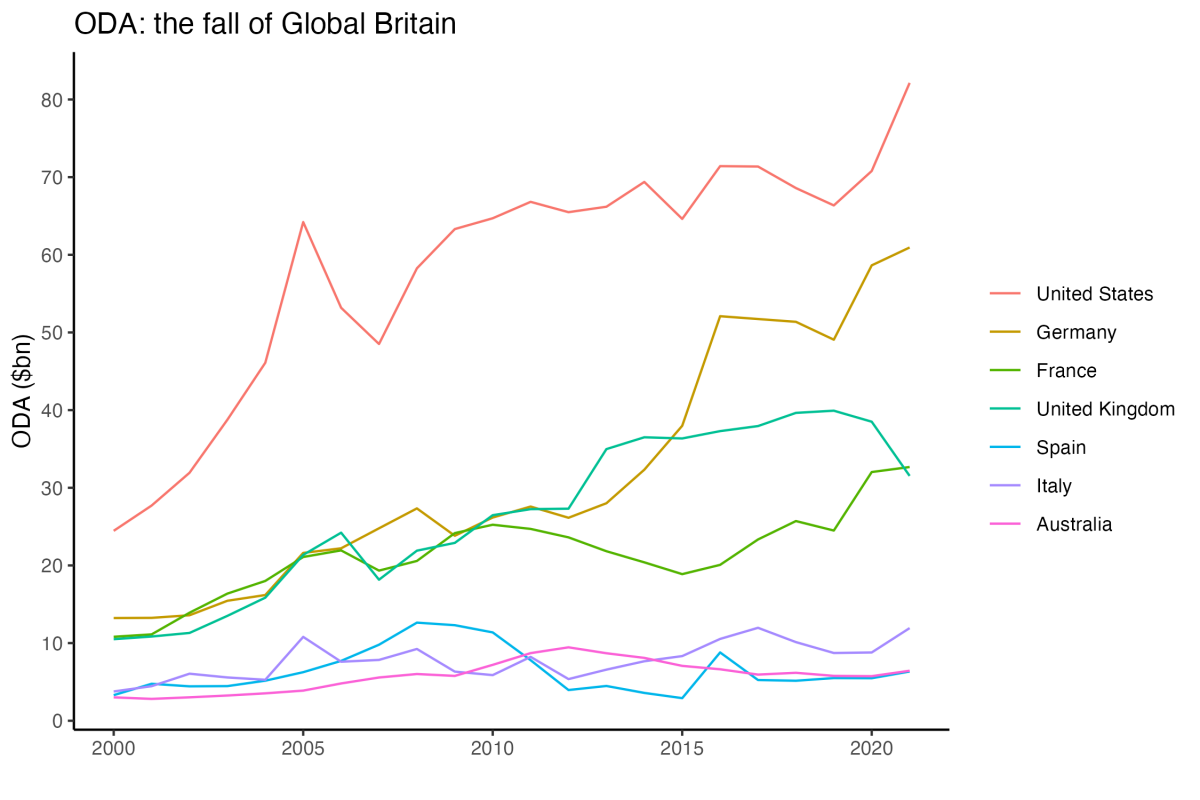
    Figure 1: Official Development Assistance (ODA) grew substantially between 2000 – 2010. However, with the exception of Germany, ODA donations have flatlined. In 2014 the UK was the largest ODA donor in Europe. It now sits with France in 3rd place, way behind Germany. In fact, donations from the UK have fallen sharply in the last 3 years (note this was happening before COVID and the COLC).
    Source: ODA DAC1 Flows, my own analysis. 

    Yet, there may be a faint glimmer of light at the end of the tunnel. Kier Starmer has recently publicly committed to re-forming DFID and restoring the UK 0.7% commitment target on foreign aid, which was reduced to 0.5% by the Conservatives. This would be a very welcome improvement and a positive step. But, given the disastrous past few weeks in the gilt markets, any Labour government that comes into power, whether that be this year, next, or in 2025, may find its hands increasingly tied when it comes to spending. Also, the dark tunnel we are currently in may get darker still; this week there have been rumblings reported of a further cut to the aid budget down to 0.3%.

    Regardless of what happens in the coming weeks in British politics it’s highly unlikely the new PM will make it his or her priority to reinstate the UK as a global leader in foreign aid. The promise of a “Global Britain” post-Brexit has failed spectacularly on so many fronts, just take the US trade deal for example, but in the sphere of development our fall from grace couldn’t be larger. 

  • Inequality in education: the private and state divide

    Inequality in education: the private and state divide

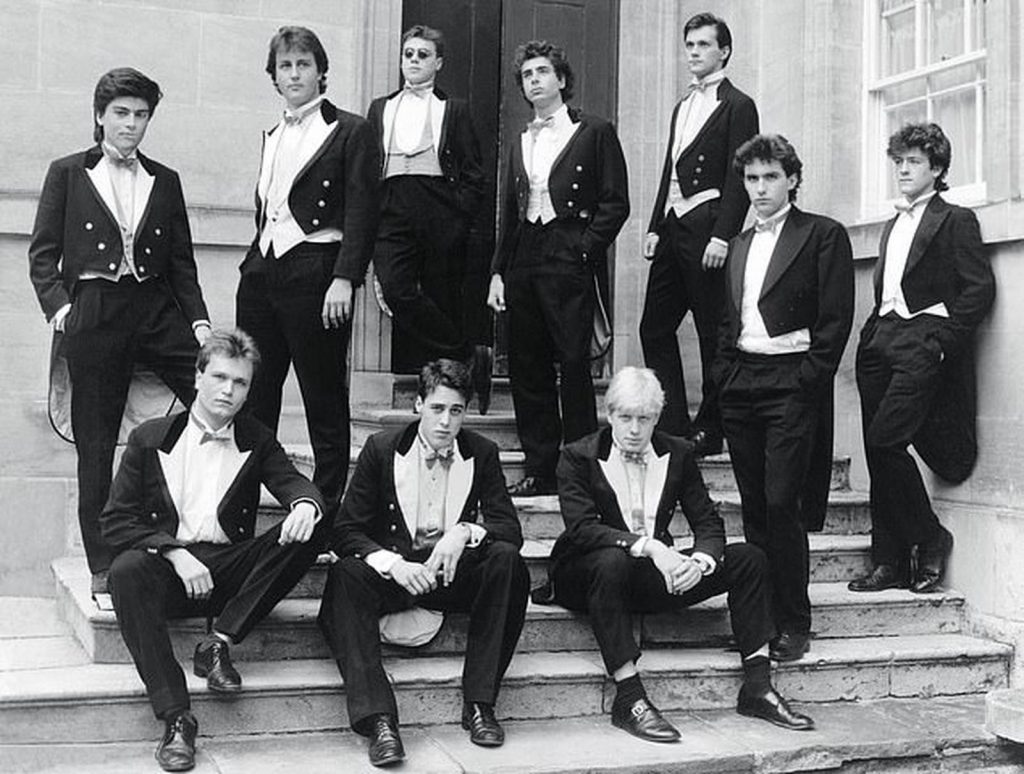
    The infamous Bullingdon Club, an exclusive all-male dining club at Oxford University. Pictured here in 1987, its members included future Prime Ministers Boris Johnson and David Cameron. The bulk of its members all went to the highest fee-paying private schools in the country. 


    The UK has a fairly good education system by international standards. We rank eighth out of forty-one similar countries for educational attainment, and we have a secondary school graduation rate above the OECD average (OECD,PISA). However, the divide in outcomes between private and state school pupils has grown rapidly in the last decade, and the difference in funding between state school pupils and private school pupils has reached record levels. Pressures on education resources- exacerbated by the Covid-19 pandemic – alongside falling teacher numbers, due to stress and burnout, are a fundamental risk to social mobility and meritocracy in the UK. 
    For context, education in the UK is highly stratified; the three main systems are state, grammar, and private. The vast majority of students are enrolled in publicly funded state schools. A few local authorities also have a grammar school system; grammar schools aim to promote social mobility through a selective admission process at aged eleven. However, the evidence that selective education improves social mobility is very weak, and the system is hardly meritocratic when wealthy households can afford to pay professional tutors for the entrance exams. Thirdly, we have the private school system – open to high-income households which can afford the average annual fees of £14,940 for a non-boarding day school.  Private boardings schools (confusingly named public schools ) include famous schools like Eton, where average fees increase to a staggering £35,289. When you consider the average household disposable income in the UK is £32,300, very few people can afford these institutions (IFS, ONS). 
    Figure 1; the gap between the average funding per pupil for state education and the average private school fee per pupil has more than doubled in the last decade. Source: IFS.

    The gap in student outcomes across several measures between state school and private school pupils is huge and growing. Evidence from the Institute for Fiscal Studies (IFS), which published a report last year on private schools and inequality, suggests that not only do privately educated pupils do better at school (when compared with state school pupils of similar cognitive ability, family background, and income), but they also receive an earnings premium well into their careers.  The IFS finds the earnings premium, by the age of 42, can be as much as 35% for men, and 21% for women. A significant proportion of this can be explained by occupational choice. Thus, why is it that less state school pupils enter high-earning industries like law and finance? Is it due to a lack of social capital, less parental pressure, or low confidence and knowledge about these sectors? The answers to these questions are not clear, but future research should investigate what is determining those choices.  Analysis of the proportion of privately educated students in elite occupations highlights the large disparity in outcomes. For example, 51% of Junior Ministers, 42% of media columnists, and 59% of Permanent Secretaries – the highest position in the Civil Service- went to a private school (I can’t find data on banking, finance, or law but the pattern is clear). This compares to 18% of pupils between the age of 16-19 who attend private school, or 6.4% of all pupils.

    Clearly, attending private school offers a range of potential advantages – not least in terms of the educational resources. However, research also suggests that private schools deepen an individuals social capital. The impact of social capital on student outcomes is very hard to measure, but it likely explains a non-trivial amount of the private earnings premium when combined with a better resourced education, and higher selection into top-earning professional industries.

    One may argue that private schools offer several social benefits. For instance, 56% of private schools are registered as charities and therefore should legally be providing a ‘public benefit’. Charity status can be met through providing means-tested bursaries, partnerships with local state schools, and encouraging charitable work among pupils. The evidence of a wider social benefit to private schools is not conclusive, but it most likely won’t be enough to counter-balance the social costs of the private and state resource divide. Moreover, bursaries are rarely enough to cover the expenses of many private schools, and partnerships with state schools have nose-dived since the pandemic.

    Nonetheless, a radical policy to abolish private education has about an equal chance of passing through parliament as Matt Hancock does of hosting a prime-time Saturday night television show (although I wouldn’t put it past him). But, I believe significant reform which narrows the outcome gap between state and private school pupils would deliver substantial social benefits. As I mentioned in the opening paragraph, it’s not as if the UK doesn’t have a good education system; I would argue that we need to fund this system as best we can and ensure it’s fit for standards, regardless of the impact on private schools. 

    The benefits of a better educated and more aspirational workforce are enormous not just for individual wellbeing but also economic growth. Economists are often in disagreement about the factors explaining economic growth, but few argue that human capital (skills, education, training) are not fundamental drivers of long-run productivity (which has been dismal for over a decade in the UK). Moreover, low productivity growth, coupled with the worst (excluding the US) income inequality in the western world, has substantially harmed the UK’s ability to weather the shocks of Covid-19 and the war in Ukraine. A better funded and larger state education system which produces a well-trained workforce with more skills, would not only help reduce long-run inequality, but also drive long-run productivity. 


    “The average fee for a boarding school is £32,000, a VAT charge of 20% on top of that is £6,400. The state spends an average of £6,125 per pupil. Effectively this means the UK taxpayer is subsiding the education of the richest families children to go to elite boarding schools for the same amount as their own children receive in education funding.”

    A low-hanging fruit policy proposed by Labour is to end the charitable status given to private schools, and in turn end their exemption from VAT and business tax rates. This isn’t just a leftist view. This exact idea was proposed previously by Micheal Gove, Tory education secretary for four years between 2010-14, who wrote in 2017 about the unfairness of the VAT exemption on private schools. A simple back of the envelope calculation reveals the clear injustice of the VAT exemption. The average fee for a boarding school is £32,000, a VAT charge of 20% on top of that is £6,400. The state spends an average of £6,125 per pupil. Effectively this means the UK taxpayer is subsiding the education of the richest families to go to elite boarding schools for the same amount as their own children receive in education funding.

    Last month, within the Labour Party, the motion to set up a new committee to investigate private schools’ “charitable status” failed by 303 to 197. Critics argue the impact of the policy is unclear, and by increasing the fees of private schools it will hurt aspirational families and force them to take their children out of private education. Some families would indeed be priced out of the private market, and others would need to reconsider the benefits of private education at the higher fees. However, the exact reduction in the size of the private sector depends on how many families would decide to switch to state school provision. Given fees have been increasing steadily for years, it seems unlikely many families will be perturbed by an increase in price. Furthermore, conservative arguments about free-markets are strangely absent in this domain – why exactly should governments intervene to influence the market price of education? You tell me.  A larger state sector accommodating a more diverse range of students would also create a range of positive peer-effects between pupils, and be accompanied with an increase in tax revenue of £1.7bn a year to spend on teachers and classroom resources. In comparison to the school budget of £57.3bn this isn’t huge, but its an improvement with essentially zero-cost on 94% of children in the country. 

    Overall, the private and state school divide has a huge impact on the outcomes of pupils. This divide has been growing since 2010, has been made worse by the pandemic, but it can also be helped by effective policy choices– in particular scrapping the charity status of private schools. This isn’t a question of whether you believe private education is morally wrong or right, nor whether you think people should have the choice. Politicians on the right will focus on the freedom to choose, however, your ability to choose depends on your income, and it’s simply unfair to provide tax-breaks which slightly reduce the economic burden for rich families (again so much for the free-market eh?). Moreover, an unequal society- with poor social mobility -harms everyones incomes because it creates a less dynamic and prosperous economy. Hence, a more equal education system would feed itself into a better economy, where if you choose to pay for education out-of-pocket then fine, but if you don’t, then you can at least know the state system is adequately funded. 

  • Qatar: an inequality perspective

    Qatar: an inequality perspective

    At the group stages of the Qatar World Cup draw to a close, the growing excitement of the football has dissipated some of the earlier anger at the event being hosted in a country with multiple human rights abuses and a very poor record on migrant worker treatment. Rightly these issues deserve serious attention, but it’s not obvious what the ethics are of who is able to host world sporting events and who isn’t. Nonetheless, if places like Qatar are going to host sporting occasions in the future it’s only right to scrutinise and understand the nature of the problems within those countries, just as we should our own. Hence, I hope to shed some light on the makeup of economic inequality in Qatar – which is inherently related to the conditions and pay of migrant workers.

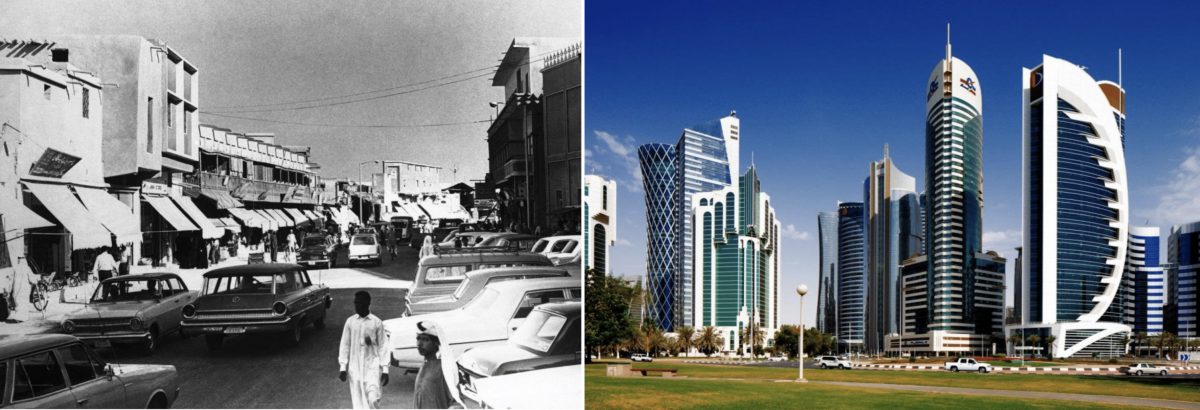
    We all know Qatar is very rich; according to World Bank estimates of GDP per capita (PPP 2017$) it ranks 4th in the world. Qatar also got very rich very quickly. Since 1970 its GDP has increased by a factor of 19. The UK’s GDP has increased by a factor of 3 in the same period. This explosion of wealth has resulted in the Qatar we see today; the photos above clearly show the monumental transformation of the country during this time. 

    Figure 1: Real GDP has exploded in Qatar over the last 20 to 25 years.

    Where the economy has grown, so has the number the number of people. In 1995 the population was a little over 400,000 – most of these being Qatari born natives. In 2021, it’s approaching 3 million. However, this isn’t due to a sudden interest in procreation among the Qatari youth; in fact almost all of the population increase is because of inward migration. This reached a peak in 2007 when a staggering 1 million entered the country in a single year – equivalent to 83% of the population at the time. Migrants now make up an estimated four-fifths of the population. But, how can a country maintain a sense of identity for its native citizens with such a huge influx of foreigners? The answer is by ruthlessly excluding migrants from the same rights as native born Qataris: segregating them socially, politically, and economically. This is a win-win for the Qatari state. It can build a new, modern and beautiful country using the oil revenue now flowing into its coffers without a supply of labor, and at the same time maintain its identity and culture – one which they wish to keep distinct from the mostly Indian, Bangladeshi and Pakistani migrant workers. 

    At the heart of this policy is the kafala system. This is a system which gives the employers of migrant workers effective control of the legal status of the worker. In practise this often results in workers facing threat of imprisonment or deportation if they leave their job. It also means they must request permission to change jobs – often requiring an intense navigation through bureaucratic systems not known to the worker. According to Amnesty International the kafala system is “inherently abusive” and, in cases, amounts to a form of modern slavery. 

    Figure 2: the population as multiplied by 7 with almost all of it due to migrant inflows.

    All in all, this has resulted in Qatar becoming not only one of the most unequal countries in the world today, but also historically one of the most unequal societies in recorded history. Figure 3 shows the top 10% of earners in Qatar earn 32 times as much as the bottom 50%. This is double the income inequality of the Unites States, which has double the income inequality of Europe. And I’m just talking about income. Notoriously wealth is hard to measure, and no doubt the Qatari elite have assets which are not accurately recorded, but from data available it also ranks extremely high on wealth inequality. 

    Figure 3: the ratio of inequality between the top 10% and the bottom 50% in 2018. This shows the top 10% in Qatar earn 32 times as much as the bottom 50%. In comparison, in Europe the number is 8.

    Qatar, even when placed in an historical context, holds its own as a deeply unequal society. For instance, included in its company are the former slave and colonial societies of Haiti in 1780, and Algeria in 1930. Figure 4 (7.3 in Piketty’s book) below shows how the Middle East ranks against these societies (Qatar has is shown to be slightly above the Middle East average in Figure 1). Haiti in 1780 was the archetypal slave colony and one of the most unequal economically in history: the top 10% earned 80% of the income. In terms of income distribution, Qatar is closer to Haiti in 1780 than Europe in 2018. It sits somewhere in the middle between the height of colonial European high-society in 1910 and apartheid South Africa in 1950. Let that sink in.

    I don’t intend to equate the plight of migrants in Qatar and slaves in the New World directly. For one, the proponents of the global slave trade, a conglomeration of Portuguese, American, Dutch, Danish-Norwegians, French, and British state sponsored merchants, who forcibly removed peoples from their homes and transported them across oceans against their will. Migrant workers in Qatar have come to the country largely by themselves, are paid wages, and do not face working environment compatible to a plantation. Nonetheless, with reports of wages as low as 45p an hour, migrant labour can hardly be considered fair, or even legal. Moreover, when you begin to think of a new country suddenly endowed or discovered with a large amount of natural resources, but not much labour to employ, it does lend itself to historical comparisons. The Southern Unites States comes to mind. 

    Figure 4: the Middle East (incl. Qatar) in 2018 ranks as one of the the most unequal regions in recorded history.

    In short, I hope to have shown how unequal Qatar is and place that in an historical context using the great data available in Thomas Piketty’s Capital and Ideology. The migrant workers in Qatar didn’t just come to build a few World Cup stadiums like the Qatar government would like you to believe (Figure 2 actually shows the net inflow of migrants has actually been declining since Qatar won the bid). Migrant workers have been used to build absolutely everything you see in Qatar, from the airports, metros and shopping malls to the skyscrapers and hotels – none of which they own or even receive a minute slice of the income which they generate. In return they have been denied the rights and privileges of the standard of living which they made possible. In the World Cup contruction many have also lost their lives – 6500 according to Guardian research or 400-500 which was flippantly admitted by a Qatari official on Piers Morgans’s YouTube Chanel. 

    Of course, the economic inequality of workers and residents of Qatar is only one perspective to take. Not least the absence of rights for LGBTQ+ people also speaks to the deep social inequalities in the country. These are all issues worth highlighting. Perhaps the legacy of this World Cup will be the power of the international spotlight and its influence on future reform. Although somehow, I think not. 

  • The Wealth Tax: silver bullet or left-wing fantasy?

    The Wealth Tax: silver bullet or left-wing fantasy?

    The idea of a tax on individual wealth has been around for decades, and every so often it creeps into the mainstream. However, as the energy crisis has highlighted the excess profits of energy companies and the disastrous “Kami-Kwasi” budget has left the UK government scrambling to balance the books, the wealth tax has gained real momentum. I focus on two things: (1) how much support does a wealth tax have politically and publicly in the UK? And (2) could a wealth tax be a silver bullet for the fiscal “black hole”? 

    Firstly, before answering these questions, it’s useful to know exactly what people mean by a wealth tax. A wealth tax is a broad base tax on all forms of financial wealth. Its proponents argue it could be levied as a one-off tax or at regular intervals, and apply to either individuals or household units. Policy makers can decide on the wealth thresholds to use. For example, supporters argue a wealth tax could apply to wealth greater than £500,000, or perhaps £1m, or even £10m. Some also argue that primary homes should be exempt. For instance, if someone owned (without any mortgages) two properties worth £1m, but lived in one of them, then a 1% wealth tax would leave that individual liable to pay £10,000 on the £1m of wealth held in a second-home (assuming that they don’t own any bonds, stocks, or other financial assets). The critical point is that a true wealth tax applies to all wealth, so for a good introduction to what is wealth, see this video from former city trader Gary Stevenson, who has recently been putting out some excellent stuff on the UK economy. 

    Turning back to the question of political feasibility, Rishi Sunak was asked at PMQs (26th Oct) whether he would introduce a tax on wealth. As he has done on many occasions when asked about the topic, he dismissed the question and gave a generic answer about fairness.  Also, although the question came from a Labour MP, the top of both major parties are in agreement on this issue; Kier Starmer has rejected the idea of introducing a wealth tax if he came to power. For now, it seems senior politicians view a wealth tax as a non-starter. 

    ‘A nurse would have to work over 20,000 years to match the vast wealth of this Prime Minister.’

    Labour MP Richard Burgon asks why Rishi Sunak won’t introduce wealth taxes on the richest in society, at PMQs. pic.twitter.com/QJXmHGIlRs— GB News (@GBNEWS) October 26, 2022

    Disclaimer, I wouldn’t usually share anything from GB News but surprisingly this was the best tweet I could find about the PMQ question on wealth taxes. 

    But what about the public – what do they think of wealth taxes? After all, on some level, politicians should reflect the average view of the British population. The Wealth Tax Commission conducted the first UK empirical study on public support for wealth taxes in 2020. They found that 75% of respondents supported a new tax on wealth, with 41% putting it as their most preferred option. Surprisingly, they also found that people on incomes below £20,000 were less supportive of wealth taxes – perhaps pointing to a lack of understanding on who would actually have to pay. Nonetheless, the report concludes that wealth taxes do have broad based support in the UK.  However, YouGov polls appear to suggest that many view wealth taxes as a less fair way of taxing: 59% of people think income taxes are fairer than wealth taxes.  The wording of this question isn’t great, since wealth taxes can work alongside income taxes to deliver a fairer system overall – rather than being a substitute for each other. Yet, this does imply that people feel somewhat more attached to the wealth they have accumulated than the income they have earned. 

    Source: If the government decides to raise taxes in order to fund public services, which of the following measures, if any, would you most strongly support? Evidence Paper 2, Wealth Tax Commission 2020, p.11

    So, if the public in general are not opposed to wealth taxes, and they agree that the gap between the rich and poor is too wide, what accounts for the lack of political will to push wealth taxes? One explanation is the ideology of ownership at the top of British politics, and generally within the establishment as a whole. In a previous blog, I wrote about how Thomas Picketty, an academic economist who has proposed a global wealth tax, describes the current ideology of our time as “neo-proprietarian” – a belief that private property is sacrosanct. This ideology justifies inequality on the basis that wealth has been accumulated by individuals due to their own merits, thus ownership of that wealth shouldn’t be taxed. 

    A secondary factor at play could be the intergenerational transfer of wealth implicit in a wealth tax. It’s a statistical fact, and also obvious in everyday life, that most wealth is held by older generations usually over the age of 50. Although not surprising, since older people have been here longer, and therefore have had more time to accumulate assets, it is not so obvious that this is fair. For instance, older generations were able to get on the housing ladder much easier, they also had access to free university education, as well as lived during a time of exceptional economic growth. Yet, since older generations are more represented in politics and more likely to vote this could greatly reduce the probability of any political will to impose taxes on wealth. 

    How much would a wealth tax raise: silver bullet or not?

    On the latter question of how effective a wealth tax could be, The Wealth Tax Commission assesses that a one-off wealth tax levied on wealth above £500,000 at a rate of 5% would raise £262bn. To put that in perspective it would fund the NHS for almost 2 years. If an annual wealth tax could raise that kind of revenue on a regular basis, the gains are potentially huge. However, the commission concludes that the administrative costs of an annual wealth tax would be too onerous, therefore they support a one-off wealth tax over a regular one. 

    Nonetheless, despite the large revenue potential of even a one-off wealth tax, the Commission recommends that reforming the taxes already in place is a  1st best option over the introduction of any new ones. One potential reform is on share buybacks. Share buybacks are when a public company uses profits to buyback its own shares. This entails a significant cash transfer to wealthy shareholders who sell the shares back to the company. Recently, instead of investing profits in say green technology or new products, many companies have simply been shovelling cash back to their owners. Therefore, a tax on this behaviour is an easy way to target this wealth. 

    The Biden administration has taken action on this already. They have just passed an exercise tax on share buyback schemes, which will come into effect at the beginning of 2023. The IPPR, a think-tank in the UK, has also recently published analysis which estimates a similar scheme in the UK could raise £225m a year, with a higher emergency rate on specific energy companies raising £4.8bn. Alongside a buyback tax, simply raising the tax on dividends to the same level as income taxes could raise £6bn a year. Both of these measures would go a long way to reducing wealth inequality in the UK. 

    Overall, it looks like a new wealth tax is highly unlikely in the short to medium term, not least because it would require a dramatic change in the ideological principles of private property and wealth. However, the government has options aplenty to make meaningful changes to the current system. Following the US on a buyback tax is an obvious example. Yet, the UK government seems unwilling to implement these changes and the mainstream media doesn’t even present them as options. This is despite there being support from multi-millionaires to make the system fairer, and the evidence presented here on public support for re-distribution. Hopefully, a positive precedent develops from the current (ineffective) windfall taxes on energy companies, but the appetite for bigger leaps forward is clearly lacking. 

  • Capital and Ideology: the big lockdown read

    Capital and Ideology: the big lockdown read

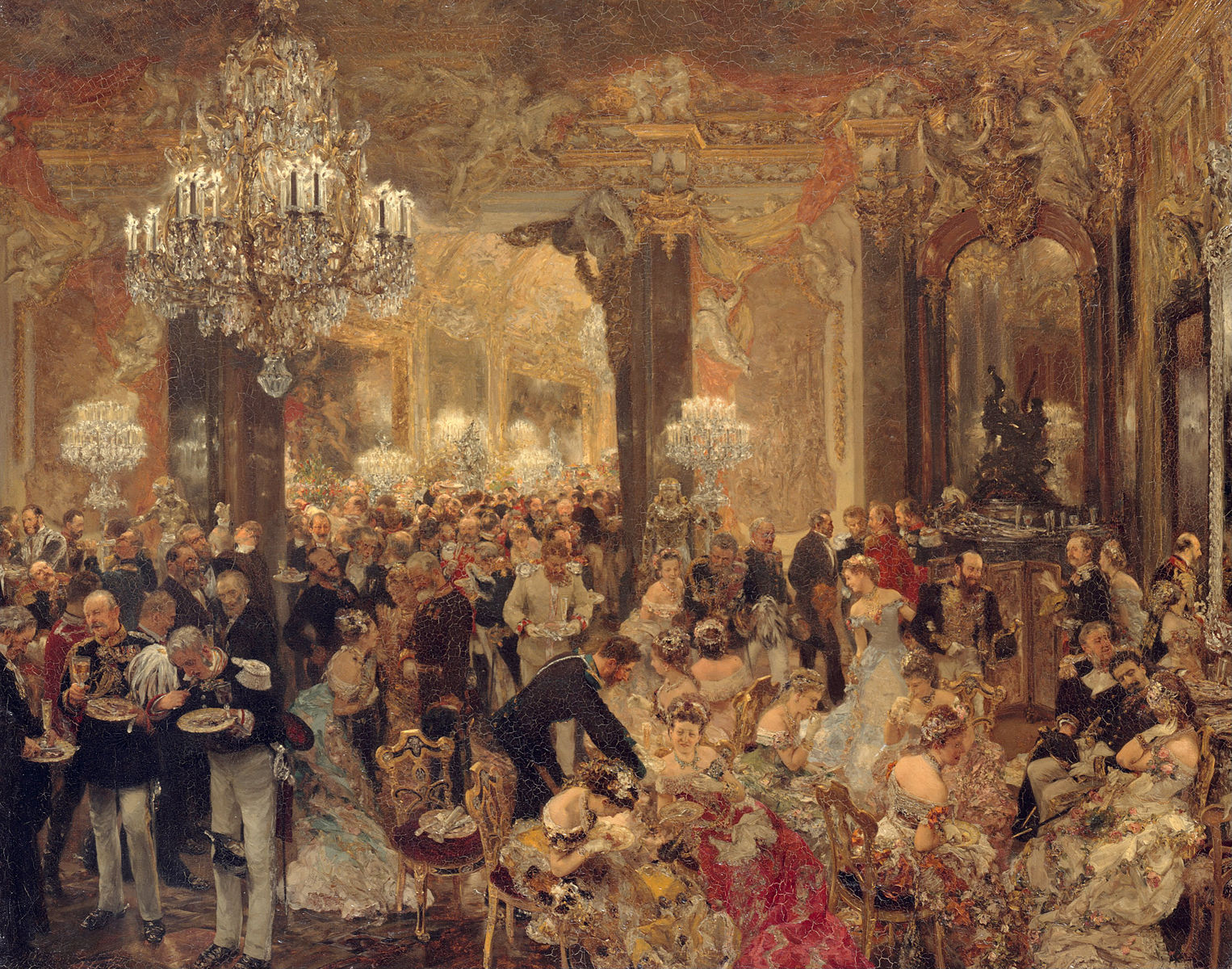
    Adolph Menzar – Dinner at the Ball 1878. The late 19th century was the height of ownership societies in Europe when 10% of the population owned 90% of the wealth and earned 50% of the national income.

    This winter the third national lockdown presented itself as an ideal opportunity to tackle Thomas Picketty’s latest epic on inequality. Capital and Ideology is focused on the history of inequality regimes and the ideologies which justify them. And despite reaching nearly 1050 pages, it didn’t disappoint.

    The main argument of the book is that inequality is neither an economic or technological phenomena, rather it is ideological and political. Picketty explains that in all societies, both past and present, there is an ideological schema which supports and maintains the existing inequality regime. In all cases, the proponents of the ideology argue that the inequality it pertains is justified – or at the very least should be maintained as to not release a “Pandora’s box” of social chaos. 

    The book takes you on a journey, meandering around several different types of inequality regimes, their justifications, the switch-points which instigated their demise (and beginnings), and ultimately, Picketty’s own thoughts on what a just society might look like. 

    We start the story in a world dominated by what Picketty calls “tri-functional societies”. These are societies which are severely inegalitarian. Members  belong to three loosely defined groups (four, in the case of India). Each group has a purpose. The clergy gives the society meaning, the nobleman give the society security, and the workers produce the goods and services the society needs to function (mainly food, shelter, and clothing). 

    Picketty argues that tri-functional societies can be found in almost all corners of the planet at some time in history and were the main form of social organisation before the rise of pre-modern capitalism and colonialism. They were maintained on the justification that if either components role was compromised the society would descend into anarchy. Each role was clearly defined and carefully incentivised to not step beyond their own function. There was very little movement between each group and extreme violence was a common outcome of any attempts to change the status quo. 

    The transition away from tri-functional societies to what are called ownership societies is mostly explained by Picketty with reference to the events and repercussions of the French Revolution in 1789. The fall of the Ancien Regime in France resulted in a “great demarcation” between power and ownership. Power, which was previously held exclusively by the monarch, was transferred to the centralised state which could guarantee private property rights. What followed was a society based on the quasi-sacralisation of property rights which were open to all (if you were male and could access them!). However, the question of the distribution of property rights was left unresolved. Thus, under the myth of egalitarianism, we see an increase in inequality in post-revolutionary France not a decrease. 

    Figure 1 below shows the share of total private property for the top 1% fell in the decade leading up to the revolution and then increased by nearly 10 percentage points during the 19th century. The rate of growth of inequality was even more dramatic when you look exclusively at Paris. 

    Figure 1: Inequality in France 1780-2000

    The ideology underpinning ownership societies of the  19th century is termed by Picketty as proprietarian ideology. This is an ideology fundamentally based on the emancipation of property. Picketty argues that proprietarian ideology can encompass a spectrum of multiple pathways. He broadly defines two pathways as critical proprietarianism and exacerbated proprietarianism. The former is the basis of social democratic societies which depend on a mix of public, private, and social ownership and emphasise the instrumental function of private property. The latter is based on a worshiping of private property over and above other rights. 

    The justification for such an unequal distribution is a similar one to the justification of the tri-functional schema. In essence, questioning private property rights is a can of worms that shouldn’t be opened; this is not only for the benefit of economic elites but also the average citizen with at least some wealth. 

    A recurrent theme throughout the book is one of switch-points in history that shape the long-term outcome of events. The lesson to learn from these moments is that inequality regimes could have taken one of many paths and the route they actually took depended largely on the ability of the central protagonists to combine “the logic of events with short term mobilisations and longer-term ideological change”.  The French Revolution is a paradigmatic example of such a switch point. Hence, the failure of elites to implement progressive taxation at this point can be seen as failure to align ideology and events. However, looking to the future, it means that inequality regimes do not necessarily follow a deterministic route and can be configured to align with egalitarian principles – this is important for Picketty’s arguments for how we can move toward a more equal society today.

    The second part of the book features a detailed analysis of the history of inequality in slave and colonial societies. This is an incredibly important part of the history of inequality at the global level- one which was missing from Picketty’s first book Capital and Inequality. Unsurprisingly, Picketty finds that slave and colonial societies are some of the most unequal in human history. For example, in 18th century Haiti  10% of the population had an income share of greater than 80% of total income. This is compared to the 50% income share going to the top 10% at the height of proprietarianism in 1910 France. 

    Perhaps one of the most startling, shocking, and powerful examples of the proprietarianism grip on society are the debates surrounding the compensation of slave owners following the abolition of slavery in 1833. The UK government agreed compensation amounting to nearly 5% of national income, which was equivalent to roughly 10 years of educational spending at the time. The justification, for what seems today to be a grossly unjust policy, is again based on the sacralisation of private property which was so endemic of the 19th century (at least until the neo-proprietarian revolution of the 1990s).

    The next stage of the journey concerns around the factors behind the fall of ownership societies following the Great War of 1914-1918. Picketty outlines three key challenges that began to threaten ownership societies during the period 1914-1945. Firstly, internal inequality began to reach a level which could not be justified by elites – especially in light of the sacrifices made by the population during WW1. Secondly, external colonialism faced challenge as its extractive institutions and moral superiority were questioned by the ruled populations. Thirdly, there was a nationalist challenge which resulted from inter-state competition buoyed by rising nationalism and inequality between nations.

    Figure 2: the fall of ownership societies 1914-1945

    Figure 2 shows the dramatic decrease in the top 10% share of total income beginning in 1914 in some countries such as Germany and rapidly falling in most industrialised countries from around 1940. In Germany the share reached as low as 28% in 1950. In the United States the share was greater at 37% in 1950 but still significantly below the 50% peak it reached just before the Wall Street Crash in 1929. In the United Kingdom and France the peak of income inequality was reached in 1910 at 52%. In the United Kingdom this reached a low of 28% in the late 1970s – an unbelievable redistribution of income which would of been unthinkable in 1910.  

    The emergence of progressive income and inheritance taxation during this period is argued to be the pre-dominant factor driving the reduction in inequality. Picketty argues these fiscal transformations were made possible because of ideological change. The multiple crises of the period 1914-1945 catalyzed these changes but ultimately they were caused by the configuration of intellectual change and external events (not forgetting that the events themselves were endogenous determined by the inequality regime). 

    The fall of ownership societies leads us to the emergence of the Social Democratic and Communist Societies of the 1950-1980 period. Picketty draws on some interesting examples of how social democratic societies loosened the grip of private property. For example, Germany introduced alternative kinds of ownership such as the co-management of firms between workers and capitalists. There was also a focus on education as form of pre-distribution policy- for instance, the US massively increased education spending during the 20th century. 

    However, according to Picketty, the social democratic societies failed for four key reasons. (1) They didn’t implement social ownership far enough; (2) they didn’t offer equal access to education; (3) they weren’t able to transcend the political economy of the nation state; (4) and they didn’t implement a progressive tax on wealth. 

    Thus, we end the story in March 2020, in the ideological epoch of neo-proprietarianism. The void left by the fall of communism and the failure of social democratic societies to deliver on their promises as been filled by the conservative revolution and the return of private property as the dominant form of ownership. Inequality is now reaching levels not seen since 1914. At this stage Picketty sets out his blue-print for the road ahead. Criticism has been thrown at Picketty for being too light touch in this area. I think this is partially justified, however, we can’t rely on Thomas to come up with all the answers and I believe his framework is nonetheless a useful addition to the discussion. Besides, by this point he was 800 words in and must have been pretty knackered!

    Highlighted by Picketty as two essential elements in the effort to transcend capitalism are social ownership of capital and temporary ownership of capital. The former can be achieved through an expansion of systems similar to the Germanic and Nordic co-management of firms which rely on the “one person one vote” principle as opposed to the “one share one vote” seen in US, British, and other economies. The latter emphasizes the circulation of capital. This can be achieved through a trio of progressive taxes on income, wealth, and inheritance. 

    In an interesting statistical experiment, Picketty shows that under certain assumptions,  a trio of progressive taxes could provide a universal capital endowment equal to 60% of average adult wealth when you turn 25, as well as provide public goods such as pensions, healthcare, and education. 

    The final pages of Picketty were fascinating and genuinely inspiring to read. I went away with hope for the future and a better far better understanding of how we might get there. Moreover, this brief overview of the book only scratches the surface of what I learned. For instance, I have omitted the entirety of the discussion on the evolution of voting cleavages, the detailed historical analysis of colonial inequality regimes, and the whole chapter on Indian tri-functional society. Not forgetting the countless sub-chapters with titles such as “On the anti-colonialist legitimacy of the Shiite Clergy” and “Chinese Revolts and Missed Opportunities”.

    The publication of the book in March 2020 sits on the faultline between  pre-pandemic and post-pandemic society. Without a doubt income and wealth inequality has played a central role in the spread and impact of the virus in the UK and throughout the world. A progressive wealth tax has also been raised as a way of dealing with the public debt – a proposition swiftly put down by Rishi Sunak but which has found increasing support among members of the new Biden administration. 

    It remains to be seen whether Picketty’s ideas of a participatory federalist socialism will be implemented. However, just as the pandemic has shone a light on the depth of inequality in our society Picketty has shown us we have a way out –  and what’s more we have been here before.